I Found My Feverish Son Locked Outside in the Rain—3 Hours Later, My Husband Asked Where He Was

Chapter 1: The Locked Door Turned an Ordinary Afternoon into a Nightmare
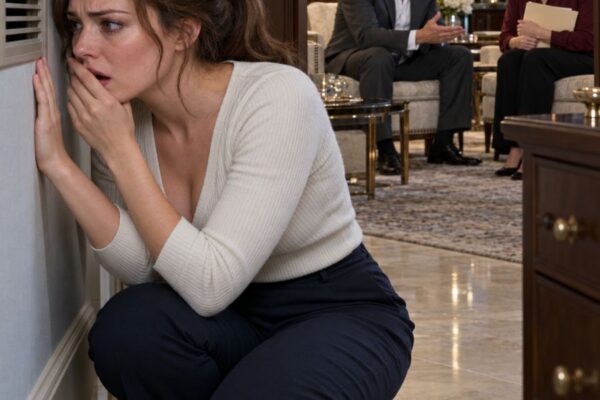
At 4:10 on a cold October afternoon, I found my nine-year-old son shivering on our front porch, soaked through and struggling to speak. Rain blew sideways beneath the porch roof; our living room lamp glowed behind the glass, but the front door stayed locked as Noah whispered, “Dad won’t let me in.” His forehead burned beneath my palm, and his breathing was too fast. Why would a father leave his sick child outside—and how long had Noah been waiting?
I wrapped him in my coat, called 911, and fetched a blanket from the car while the dispatcher stayed with me. Noah apologized for getting wet, calling me at work, and making me leave early; I told him he had done nothing wrong, though my hands shook as I reported his asthma and fever. When the ambulance arrived, I climbed in beside him instead of pounding on the door. Graham never came outside.
Until that afternoon, I had explained away the tension in our house as a difference in parenting. I’m Mara Whitcomb, thirty-six, and I supervised a medical billing team outside Harrisburg, Pennsylvania; Graham, thirty-nine, managed accounts for an insurance company. We had been together fifteen years, married twelve, and bought our modest two-story home believing we were building something secure. I asked Noah questions when he struggled, while Graham insisted rules taught responsibility. I remembered him patiently helping Noah build cardboard towns and teaching him baseball, so I told myself the strictness was balanced by love.
But Noah, a fourth grader who filled notebooks with maps and tiny buildings, had begun studying his father’s face before speaking. If Graham came home irritated, Noah checked whether his shoes were lined up correctly. That morning, Noah barely ate and rubbed his forehead, saying he felt tired; I told him to visit the school office if he worsened. Graham was working from home and reminded him about an unfinished worksheet; when I suggested he finish later, Graham gave me the familiar look that meant we would argue in private.
After school, Noah called me from his watch. He was outside, he said. I thought he meant the backyard until he whispered, “I can’t go in. Dad won’t let me.” I called Graham while driving home, but he ignored me.
I called again at every light, imagining the wind reaching beneath the narrow porch roof, and kept telling myself Noah would be waiting just inside. He wasn’t: on the porch, he told me his code hadn’t worked. At the hospital, doctors diagnosed pneumonia and increased his breathing support as they watched him closely. Then Graham finally arrived, demanded to know where his son was, and collapsed in the corridor before I could tell him what had happened.
Chapter 2: A Silent Code Revealed What His Father Refused to Admit
A nurse checked Graham’s pulse and blood pressure while I stood between two emergencies, furious and frightened. He came around, admitted he had skipped lunch and barely drunk water, and was evaluated; staff found no immediately apparent serious cause. I returned to Noah’s bedside, where Dr. Rebecca Miller explained that the pneumonia had been developing before the rain; the exposure added stress, but she could not say it caused the infection. Noah was seriously ill, and the team could promise only careful treatment and close monitoring.
When Graham entered and touched the blanket near Noah’s feet, Noah saw him and drew his knees closer. “I didn’t know he was this sick,” Graham said, blaming the worksheet and insisting Noah often used tiredness to avoid work. I asked why he hadn’t opened the door when he could see Noah was wet; he muttered, “This isn’t the place.” “It’s exactly the place,” I said, “because he’s here for care.” Graham claimed he had told Noah to cool off for a few minutes and expected an apology, so I asked why he hadn’t checked after those minutes.
Graham said the afternoon got away from him and he thought I had picked Noah up, but he hadn’t called to check; his messages came only after I reached the hospital, asking why I had taken Noah without telling him where we were. He spoke as though the problem was my defiance, not a frightened child outside in the rain. I ended the argument when Noah’s breathing changed and the nurse returned. That night, Noah asked, “Was I bad?” He thought apologizing might have made his father unlock the door.
With my friend Elise Bennett beside me, I wrote down the times, Noah’s exact words, the wet clothes, my unanswered calls, and what I had seen myself. A hospital social worker said the circumstances raised child-safety concerns and would be reported. I tried to separate facts from guesses.
The next day, while Noah rested, I opened the shared app for our keypad lock and checked its activity history. One entry showed Noah’s access code had been disabled that afternoon; another recorded an unsuccessful attempt to use it.
I showed Graham the log, and he admitted he had disabled the code “as part of the consequence,” so Noah couldn’t come and go as if he had ignored an order. “He had his watch,” he said; “he could’ve called me.” “He did ask to come inside,” I replied. “He had to apologize first,” Graham said calmly, as if explaining a workplace policy. He had deliberately blocked his sick nine-year-old from entering their own home; the lock had recorded what Graham still refused to call wrong.
Chapter 3: The Marriage Fractured When Love Became Another Excuse for Control
Noah improved, but he still needed oxygen and close observation. I stayed beside him and began hearing fear beneath his habits: he studied adults’ expressions, triple-checked his schoolbag, and worried over unfinished work. Earlier, he had asked whether people could live in a house after breaking one of its rules. I assumed he meant his cardboard towns. Now I wondered how often he had tried to ask for help.
Graham’s mother, Helen, called after hearing Noah was hospitalized. When I told her Graham had locked Noah out in the rain while sick, she said he was strict because he wanted the boy to stand on his own feet. “A parent can make a terrible mistake without being a terrible person,” she argued. Graham had grown up under a father who treated mistakes as weakness, and Helen had once called such harshness love. Noah was the child in the hospital bed, and I told her to understand what had happened, not defend Graham’s intentions.
When Noah woke, he asked if his father would be angry because he had told me. I promised no one should punish him for asking for help, though I didn’t promise Graham would never be angry; I couldn’t control that. Elise reminded me to record even the small memories and offered her guest room. I remembered Noah checking the clock before Graham came home, avoiding friends’ visits because Graham liked quiet, and apologizing whenever an argument ended. I had soothed Graham, finished Noah’s tasks, and called it keeping peace; I had taught my son to manage an adult’s feelings.
I took Noah’s clothes, inhaler supplies, drawings, and damp notebook from the house while Graham was away. The unfinished worksheet still lay on the dining table, three multiplication problems beneath a pencil. That ordinary page was the most disturbing thing in the room: my child had been denied shelter over work that could have waited. I saved the lock history and messages, then contacted family-law attorney Daniel Vail, who explained how to preserve records and seek temporary protections without predicting what investigators or a court would decide. I would stay with Elise until there was a safe plan.
Graham called it one bad afternoon and accused me of turning people against him. “Don’t you believe people can change?” he demanded. “Yes,” I said, “but Noah can’t live with the consequences while we wait to see.” Noah was discharged only after his doctors judged him ready for home care, and I took him to Elise’s.
That night, he dreamed someone changed a door code while he stood outside and woke crying. He asked whether I would hear him if his bedroom door was shut; I told him he could knock or open it, and I would answer. I checked the latch twice—not to lock him in, but to make sure nothing could. By morning, I knew we could not return on Graham’s promise alone.
Chapter 4: The Evidence Forced Graham to Face the Choice He Made
The investigation moved through questions and records, not a dramatic verdict. The school nurse confirmed Noah had reported fatigue and a headache; the symptoms hadn’t looked like an emergency at school, but he hadn’t invented them to escape homework. His teacher remembered his anxiety over unfinished assignments. I gave the investigator the lock log, call records, Graham’s messages, and my account of the porch. I separated what I knew, what Noah reported, and what I couldn’t prove; accuracy mattered more than making Graham sound monstrous.
Daniel explained child-safety reviews and family-law proceedings had different purposes. We focused on Noah’s needs: follow-up care for his lungs and asthma, reliable school pickup, and contact that didn’t force him to reassure his father. Graham was outraged by the questions. He insisted he’d never struck Noah; I had never witnessed him do so, but the absence of one kind of harm didn’t erase what he’d done. He had used the front door to enforce obedience, then failed to check if his child was safe.
Weeks later, we met in a room with a clock, tissues, and a small table between us. Graham said he had started talking to someone about his own childhood and discipline. I told him I hoped it helped, but Noah’s safety could not be a test of whether treatment was working. Graham said everything he did was wrong now. I reminded him that his apologies kept turning into accusations that Noah had manipulated him or that I had overreacted. He fell silent, and for once I did not rush to comfort him.
I told him I was pursuing separation, and when he asked whether I hated him, I said, “No, but that isn’t what decides where Noah lives.” I remembered Graham carrying our baby, the crooked pancakes, and baseball lessons; those memories were real, but they did not reopen the door he had deliberately closed. “You required obedience before giving him shelter,” I said. “That changed what I can trust.” He cried, and I felt compassion, but I kept my hands in my lap. His tears could not make the decision for me.
Later, Noah asked, “If I hadn’t called you, would you still be married?” I told him he’d done the right thing by asking for help; the choices adults made were ours, not his. He could miss his dad and still not want to return.
Through the proper process, Noah’s primary residence remained with me, and contact with Graham was subject to safeguards and professional guidance. There was no grand courtroom speech or instant resolution, only difficult discussions, documents, and limits that had to be respected. Graham could work to show change, but Noah did not have to trade security for reconciliation. Later, Graham wrote that Noah’s fear was his responsibility, not Noah’s failure to obey. I acknowledged it without changing our arrangements; consistency mattered more than one better sentence.
Chapter 5: A New Key Finally Proved Home No Longer Had Conditions
Our rental was small, with a refrigerator and clicking heater. I taped a cupboard schedule for school, work, appointments, medicine, and backup contacts. Money was tight; I sometimes cried over bills. When Noah asked if I was mad, I told him I was frustrated by an adult problem, not him. He hesitated, then sat beside me and drew a crooked house.
Noah returned to school gradually and began asking teachers for help without seeming terrified of the answer. Counseling helped, though sharp voices on television could still make him tense. Once, he spilled paint while helping me with a shelf and froze, waiting for anger. I called it an accident, helped him wash his foot, and let him try again. Later he said, “I’ll fix that bit.” Mistakes were becoming problems to solve, not offenses that could cost him belonging.
Helen began changing, asking about Noah’s drawings and listening as he explained bridges and roads. She admitted she’d taught Graham that harshness meant love and never asked what he needed to feel safe; I told her adults had to break the pattern, even when the past explained it. Graham asked to send a gift, but Noah wanted only a short message about the baseball glove he’d left at home. During a brief permitted call, Graham said parents sometimes had to make difficult decisions; Noah stiffened, so I ended it and reminded Graham not to make our son absorb blame. We kept the safeguards, and missing the good years didn’t mean I had to return.
I still missed Graham—the jokes, our history, the future we’d planned. When he asked if I’d throw away our marriage over a door, I said, “It wasn’t a door. It was a choice you made when our son needed you.” I stopped measuring peace by how quickly arguments ended. When work delayed me, I arranged backup pickup and told Noah. He was upset I hadn’t warned him, so I apologized and helped him plan for next time.
By the next cold rains, our house had familiar sounds, and when Noah’s notebook cover split, we made a new one and kept his first drawing inside. He drew an ordinary front door with a step and a window. When I asked what the place was called, he considered it and said, “Just home”; then he asked to stand under the covered step and smell the rain. “I thought maybe I was making trouble,” he admitted.
“You were asking for help,” I told him, and he nodded: “I know that now.” Inside, he wiped his shoes, hung up his jacket, and returned to his drawing. I checked the latch, then looked at the key beside it: Noah’s own, tagged with his initials, never a reward for good behavior or a punishment to withdraw. His unfinished page could wait; he chose a book instead. Our home would never make asking for help a reason to shut the door.
You Might Also Enjoy
My brother in law told the whole family at Easter dinner that he saw my wife leaving a motel with…
At Mom’s Birthday, She Publicly Called Me “The Biggest Mistake Of My Last 30 Years.” By Morning…