“Mom doesn’t follow those accounts. It won’t be a problem.” I froze outside my kitchen as my daughter plotted to take $170,000 from the savings my late husband and I had built. I rushed to the bank and stopped the transfer. Then a mortgage processor emailed me a gift letter claiming I’d given her the money. The signature looked like mine.
“Mom doesn’t follow those accounts. It won’t be a problem.” I froze outside my kitchen as my daughter plotted to take $170,000 from the savings my late husband and I had built. I rushed to the bank and stopped the transfer. Then a mortgage processor emailed me a gift letter claiming I’d given her the money. The signature looked like mine.
PART 1 — My Daughter’s Kitchen Phone Call Put Our Savings at Risk
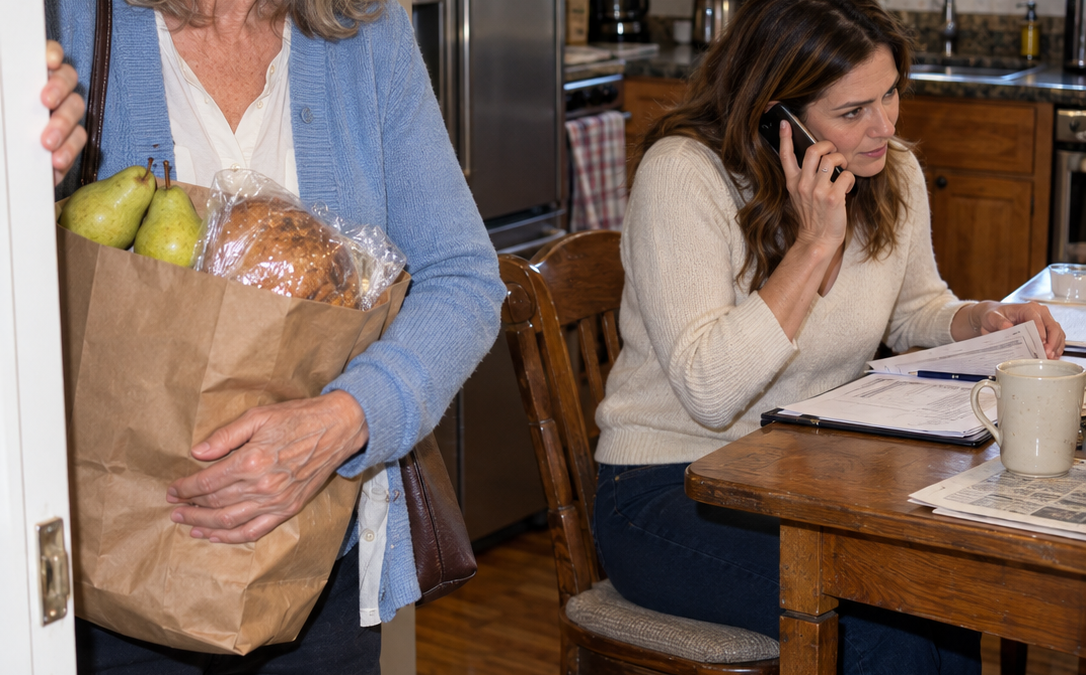
The pears knocked against one another in my grocery bag as I stood in the mudroom, listening to Allison explain how she intended to take my money.
“Tomorrow morning,” she told whoever was on the phone. “Derek already talked to the agent. Once the transfer clears, we can sign.”
I had come home early from my Tuesday walk along Lake Ontario, stopping at Rochester’s public market for pears and rye bread. At sixty-three, I thought I knew what an ordinary morning looked like.
Allison was thirty-five. She sat sideways in the oak chair Frank and I had bought before she was born, one socked foot hooked around a chair leg. Her coffee mug rested on the old newspaper Frank always put beneath cups. She looked comfortable, which hurt.
“Mom doesn’t follow those accounts,” she said. “She still asks me what her banking app is doing. It won’t be a problem.”
I backed outside, set down my bag and tried to remember what I had signed eight months earlier.
Allison said a joint account would make emergencies easier. Frank had been dead two years, and I’d had pneumonia that spring. She’d driven me to appointments and picked up prescriptions. When she suggested adding her name to checking, I heard concern, not opportunity.
At the credit union, an employee had explained that a joint owner could access the money. I’d nodded. I hadn’t imagined Allison might consider that permission an invitation.
Most of the balance came from our cottage on Canandaigua Lake, bought when the roof leaked and the porch leaned toward the water. Frank repaired it on weekends; I worked extra insurance claims. After his fatal heart attack, I couldn’t go there alone. I sold it in July and left the proceeds, along with his life insurance, in checking.
One hundred seventy-six thousand, four hundred twenty-five dollars. I knew the balance without opening the app. I had checked it so often that the numbers felt like the cottage’s new address.
I got in my car and called the credit union from the driveway. Instead of describing what I’d heard, I asked whether the branch manager could see me immediately. The receptionist said Daniel Ortiz had an opening at ten-thirty.
By the time I reached his office, my hands had stopped shaking. Daniel listened as I told him about the conversation and asked whether anything large had been scheduled. He studied his monitor for a long moment.
“There is an outgoing transfer request for $170,000,” he said. “Set for tomorrow. It was initiated under Allison’s access.”
Hearing the number from a stranger made it horribly real.
“Can you stop it?”
“We can flag the dispute and suspend the pending transaction while we review it,” he said. “But I need to explain something. She is a joint owner. The bank can’t decide, simply because you say so, which of you beneficially owns the funds.”
He showed me the account agreement. Either owner could withdraw money. I had signed that page. Then he showed me what documentation the credit union needed to place a dispute hold. I completed the form while he called the operations department.
The transfer was stopped. Daniel printed a transaction summary for me, including the name of the destination bank. He couldn’t promise that getting the money back would be straightforward if the transfer went through. That did not mean Allison’s authority had vanished, and Daniel refused to pretend otherwise. He suggested I call an attorney before doing anything else with the balance.
My lawyer, Rachel Berman, answered between appointments. I told her the source of the deposits, the account history, and the exact words I’d overheard. She asked me to preserve every record and warned me not to claim the money was safely mine merely because I’d earned it.
“Still,” she said, “if it’s traceable entirely to you and Frank, we have a basis to dispute her claim. You’re also an account holder. The practical question is how to secure it without making an already messy case worse.”
With Rachel advising me by phone, I returned to Daniel’s office. We opened an account in my name alone, documented the source of the funds, and transferred the available balance except for twenty-five dollars. The credit union confirmed the suspension of the outgoing payment and issued new online credentials. Rachel made clear that moving the money protected it for now; it did not settle any future ownership argument.
Allison and Derek had lived with me since July, when their lease ended. They wanted a duplex with an upstairs rental. A couple of months, they’d promised. I made breakfast around Derek’s sales calls, washed their towels, and stopped hosting book club when Allison complained about the noise.
It would have been easy to list every irritation and call it a warning. That wasn’t honest. Allison had also taken me to the emergency room without being asked. She brought flowers on Frank’s birthday. People can be loving and dishonest in the same house, which makes recognizing either one harder.
At one, I met Rachel in person. She told me not to change the locks or dump their belongings outside. Five months in my home gave them occupancy protections under New York law, even without rent or a lease. If they refused to leave, we would need proper notice and possibly a court proceeding.
I hated learning that she could plan to take my savings and still have legal rights to the guest room. Rachel listened patiently.
“Your money and your house are two different legal problems,” she replied.
At three-forty, an email arrived from a mortgage processor I had never met. Its subject line read: GIFT FUNDS — DONOR CONFIRMATION REQUIRED. The message asked me to verify a document submitted in support of Allison and Derek’s loan.
I opened the attachment. My name appeared above a signature that looked enough like mine to fool a stranger.
According to the letter, I’d agreed to give my daughter $170,000 with no expectation of repayment.
PART 2 — My Daughter Called It a Loan While Her Husband Blamed Paperwork
I stared at the letter until the words stopped looking like words. It named me as the donor, gave the correct amount, and listed my old home phone number. There was a flourish on the signature that I hadn’t used since college.
Rachel told me to forward the original email to her and not respond until we’d checked the lender’s contact information independently. Then we called the number on its website. The processor confirmed that the document was part of a mortgage application for an owner-occupied duplex in Greece, a suburb west of Rochester.
“I never signed that,” I said.
The woman stopped typing. She told me the file would be referred to underwriting and that someone might need a written statement. I gave her Rachel’s contact information. For the first time all day, I was relieved somebody else was asking questions. I wrote down her name, the time, and every promise she did not make.
At five-twenty Allison’s name lit up my phone. I let it ring. By five-forty, Derek’s truck was in the driveway and both of them came through the kitchen door, looking as if they’d rehearsed their expressions on the way home.
“Mom, there’s a problem with the credit union,” Allison said. “I can’t see the balance.”
“I know.”
Derek set his keys on the counter. “Is this about the house? Because we were going to explain everything.”
“Explain why you scheduled a transfer from my account without asking me.”
Allison glanced at him. There it was: the small, quick exchange people make when the story they’ve practiced needs revising.
“I’m on the account,” she said. “You put me there.”
“I did. I wish I’d listened more carefully to what that meant.”
Derek pulled out a chair but didn’t sit. “Legally, that money is accessible to both of you. We’re not criminals for planning a down payment.”
“Then why did a lender receive a gift letter with my signature on it?”
Allison’s face changed. Derek said the form had been a draft. I asked why a draft was signed and submitted. He said mortgage paperwork could be corrected. Allison said she thought I’d be pleased once the tenants started paying rent.
“You thought I’d be pleased after the money was gone?”
She rubbed her forehead. “We were going to pay you back.”
“Then it wasn’t a gift.”
Derek’s jaw worked. “You don’t understand how complicated financing is.”
“I understand a signature I didn’t make.”
I told them Rachel was preparing written notice to end their stay, and that I would follow whatever process the law required. Until then, I wanted communication about money in writing. I wasn’t throwing them into the street tonight, although part of me wanted to.
Allison stared at the kitchen table. “If you tell the lender this is fraudulent, we’ll lose the property.”
I looked at the familiar scratches Frank had sanded smooth three different times. She hadn’t asked if I was frightened. She was asking me to keep her deal alive.
PART 3 — The Mortgage File Forced Me to Question My Daughter’s Apology
By Thursday, Rachel had sent a formal notice about the living arrangement and a letter disputing the supposed gift. She also requested the credit union’s preserved transaction records. I changed passwords, reviewed my credit reports, and froze my credit. My days filled with chores.
Allison began leaving notes by the coffee maker. The first apologized for “how everything came across.” The second said she and Derek were under terrible pressure. Their realtor had told them the sellers wouldn’t extend the financing deadline indefinitely. They had already deposited ten thousand dollars of their own money.
It was money I hadn’t known they had. For five months they’d told me they couldn’t afford groceries while they saved for a down payment. I thought of the roast I’d bought at Thanksgiving because Derek liked leftovers.
Friday evening, Allison found me folding dish towels. Derek was at work, and without him she sounded more like the girl who used to confess broken picture frames before I found the glass.
“He said we’d refinance and give it back within a year,” she told me.
“Did you believe that?”
“At first.”
“And when you stopped believing it?”
She looked at the towels. “We’d already paid the deposit. Everything was moving.”
I wanted to hug her. Instead I asked who had put my name on the letter.
“Derek made the PDF,” she said. “I sent it.”
The admission cost her something; I could see it. It didn’t excuse her. She had been the person on the kitchen phone, laughing because she thought I would discover the transfer too late.
“Will you tell the lender that?” I asked.
Her answer came slowly. “If I do, Derek says they’ll flag the whole application. He could lose his job if his company hears about it.”
“Your silence won’t make the signature real.”
She left the room without promising anything. In the hall, I heard her dial Derek and lower her voice. For once I didn’t follow, though I wanted to know which version of the conversation she would give him.
That night I slept badly. I had kept Frank’s old flannel robe hanging behind our bedroom door for two years, and near three in the morning I caught myself holding its sleeve. I wished he could tell me whether I was doing the right thing. He had always been patient with Allison, sometimes too patient, and now there was nobody left to disagree with me over breakfast.
The following Monday, an investigator from the lender called. He said the underwriter had suspended the application, but couldn’t predict what would happen. He asked whether I would provide a signed statement and a copy of my specimen signature through Rachel.
I said yes. Then I called Allison and told her what I’d agreed to do.
She didn’t shout. “Derek says if you follow through, he’ll challenge you for half the joint account.”
For a moment the kitchen seemed to tip sideways. I had stopped the transfer, but I hadn’t stopped the fight.
PART 4 — My Daughter’s Claim to Our Savings Reached the Lawyer’s Desk
Derek’s attorney sent a letter the next week claiming Allison had an ownership interest in the funds. It wasn’t a lawsuit, but Rachel treated it seriously. She explained that Derek couldn’t personally claim half merely because he was married to Allison; any claim would be Allison’s, and she’d need evidence. That distinction steadied me more than Derek’s threats had frightened me. A joint account created presumptions neither of us could wish away. We gathered the cottage closing statement, life insurance records, deposit history, and messages from the spring in which Allison had called the account “just in case something happens to you.”
Meanwhile, Derek stopped talking when I entered a room and left real estate listings on the shared printer. One night he asked whether I planned to spend all that money “sitting alone in this house.”
I said I hadn’t made any plans for him to approve. He muttered that I’d never been generous, then looked surprised when I reminded him of the mortgage-free guest room and the dinners waiting in the refrigerator. That exchange exhausted me.
The lender rejected their application after reviewing the disputed gift documentation. Rachel told me a referral for possible fraud wasn’t the same as a criminal conviction. A Rochester police detective took my statement and copies of the records; he also warned that joint ownership complicated the attempted-transfer issue. I appreciated being spoken to like an adult rather than promised an instant arrest.
Two days before Christmas, Rachel arranged a meeting at her office to discuss an orderly move-out and the account dispute. Allison arrived with Derek, both carrying paper coffee cups. They’d finally found an apartment available in early January. Derek wanted me to pay their moving costs if they signed a release.
“You’ve been living here without rent since July,” I said. “I’m not paying you to leave.”
He leaned back. “We can stay until a judge says otherwise.”
“Yes,” Rachel replied. “And my client can begin that process. Or we can agree on a date now.”
For the first time Derek looked less certain. Court would cost money and bring questions their mortgage application had already raised. Rachel slid the proposed agreement across the table: they would leave by January sixth, return the keys, and acknowledge that no rent or financial support was owed. The bank-account ownership dispute would be handled separately; signing the housing agreement waived neither party’s claims about that money.
Allison read it twice. “Mom, you really want strangers in that bedroom instead of us?”
“I don’t want strangers there. I want to stop listening at my own kitchen door.”
She began to cry. I didn’t know whether she was grieving our relationship or the life she’d imagined in the duplex. I suspected both.
Derek pushed the papers away. “Don’t sign. She’ll cave once Christmas comes.”
Allison picked up the pen. Her hand shook so badly she had to steady it with the other one.
“I won’t ask her to do that again,” she said, and signed.
PART 5 — After They Left, I Made the Guest Room Mine Again
They moved out January sixth. I stayed upstairs while movers carried boxes past Frank’s fishing photographs. Allison left both keys and the garage remote on the counter. Neither of us offered a hug while Derek counted boxes.
The locksmith came the next morning. He replaced the front deadbolt and checked the patio door. I tested the new key three times. Habit, not triumph.
Consequences arrived slowly. The sellers released Allison and Derek from the duplex contract but kept part of their deposit. Their lender closed the application. Allison took unpaid leave while her clinic reviewed her involvement; she wasn’t fired on the spot. Derek kept his job.
The detective made no promises. He said the joint-account issue was complicated, but the submitted signature gave investigators something specific to examine.
In February, Rachel negotiated a settlement using deposit records from the cottage sale, Frank’s policy, and my earnings. Allison withdrew her claim to the joint-account balance and agreed not to challenge my transfer of it. Our agreement didn’t stop the criminal investigation.
Allison offered to repay some documented expenses she’d let me cover. I accepted monthly installments, not an argument over every receipt. Her first payment arrived in March with a note: “I knew you trusted me. I used that.” It was her first apology without an excuse.
In August, they appeared in court on reduced forgery charges connected to the lender’s gift letter. Both pleaded guilty. The judge imposed probation and community service, with a condition barring them from contacting me directly. The case rested on the forged letter, not the cancelled joint-account transfer. Allison turned toward me afterward. I held my purse in both hands and stayed seated.
I kept the note in my desk without answering. Rachel asked whether I wanted a plan for future contact. Not yet, I told her. I could imagine meeting Allison for coffee someday, in a place neither of us owned. What I couldn’t imagine was pretending nothing had happened. I passed our old pancake diner but wasn’t ready to go inside yet. Some evenings I missed her so badly I reached for the phone. Missing her didn’t require reopening the account or my front door.
With the guest room empty, I painted it a muted lake blue. I put Frank’s reading chair beside the window and hung the watercolor we’d bought on our twentieth anniversary. My sister came from Buffalo to help, though she spent more time drinking coffee and insulting my painting technique than actually painting. I was grateful for both activities.
That spring I spent a weekend in the Finger Lakes. By September, book club met at my house again. Nobody complained about the noise.
Last Tuesday, ten months after that phone call, I came home carrying pears and rye bread. The maple Frank planted beside the driveway had turned an extravagant red. I made tea, set out two plates for my sister’s visit, and sat in the oak chair at the head of the table while the kettle warmed.
THE END
You Might Also Enjoy

My Roommate’s AC Died in the Heatwave… She Stood at My Door in a Robe “Can I Sleep in Here Tonight?”


I Gave a Stranger My Address in Case She Needed Help… 3 Days Later, She Actually Showed Up