My Dad’s Friend’s Daughter Kept Beating Me at Pickleball… Then Said, “Loser Buys Dinner.”
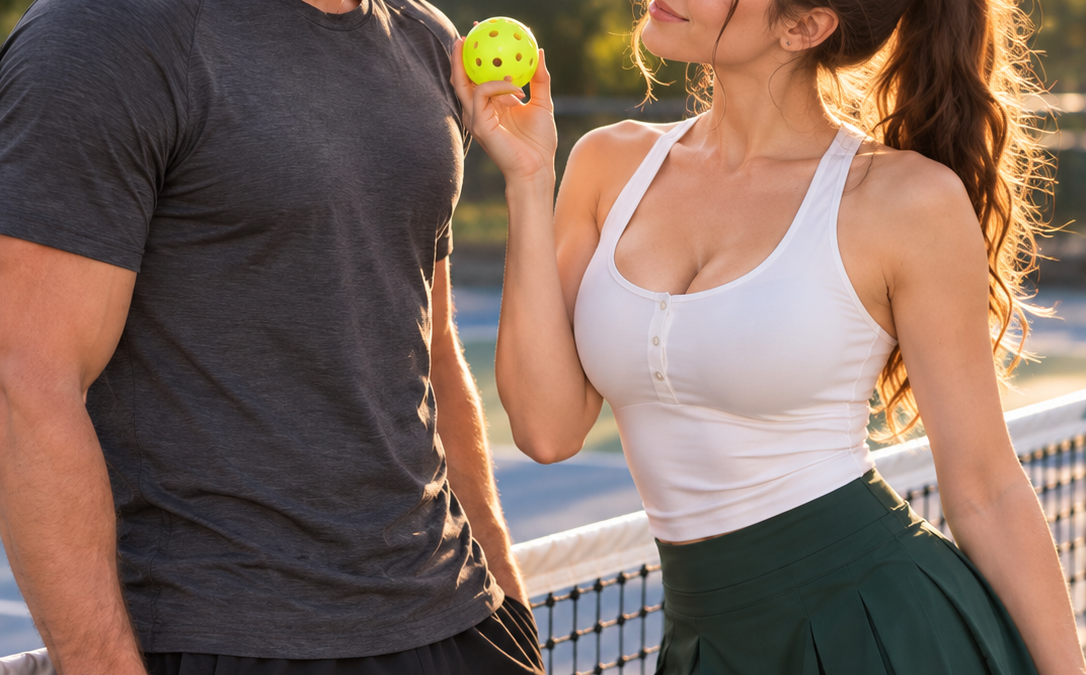
My Dad’s Friend’s Daughter Kept Beating Me at Pickleball… Then Said, “Loser Buys Dinner.”
“Loser buys dinner,” Elena Voss said, after beating me twice at pickleball in front of our fathers. I was twenty-eight, an engineer who could calculate drainage for an entire subdivision, and apparently incapable of recognizing when a woman was asking me out. Elena was my dad’s best friend’s daughter, which made getting this wrong more complicated than an ordinary bad date. The first dinner turned into weeks of increasingly personal bets. Then she mentioned a promotion that could take her away most weekends. By the time I realized what we were actually risking, one of us was going to have to stop hiding behind the score.
My Dad’s Friend’s Daughter Made Losing Feel Suspiciously Like Winning
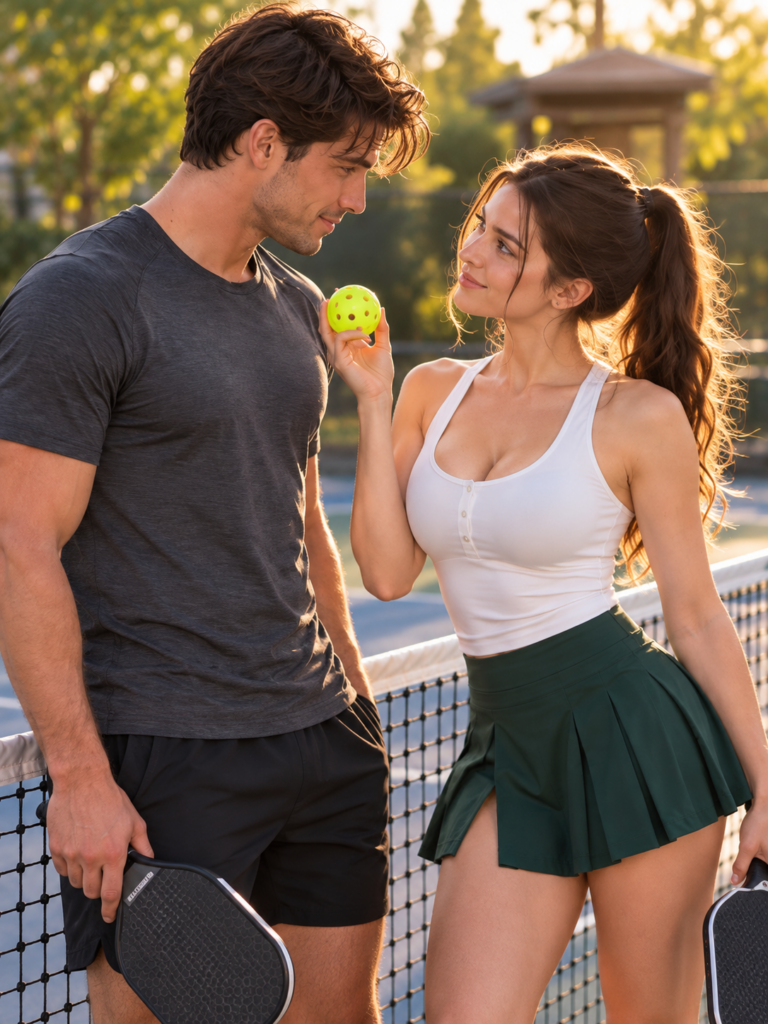
“Loser buys dinner,” Elena Voss announced, twirling her paddle while I bent over with hands on knees.
She had beaten me twice. Not narrowly, either. I was a civil engineer, a man who spent his workdays figuring out why expensive things failed, and I couldn’t explain why I kept sending a little plastic ball exactly where Elena wanted it.
“Third game,” I said. “Winner picks the restaurant.”
“I’m already winning.”
“Then you shouldn’t be nervous.”
Elena laughed, which was becoming an irritatingly effective distraction.
We were at a public recreation center in Raleigh, North Carolina. My father, Mark Laurent, and Elena’s father, Stefan Voss, had arranged the game after another player canceled. Their friendship went back decades, through cookouts, graduations, and countless backyard dinners.
I remembered Elena as the teenager who organized neighborhood fundraisers. Now she planned corporate events. I was Mark’s quiet son, back in town to close on a condo near Cary.
Neither description prepared me for the person across the net.
“Ready?” she asked.
“I’ve been ready.”
“You’ve been analyzing. Different hobby.”
She served to my backhand. I returned it deep, took two steps forward, and watched her drop the next shot inches over the net. I reached it, barely. She sent the ball behind me before I could recover.
“Maybe buy me an appetizer too,” she suggested.
My dad, from the benches, called, “Nico, bend your knees!”
“I have knees, Dad.”
“Couldn’t tell.”
Stefan laughed into his water bottle. They went back to arguing about somebody’s backyard deck, leaving Elena and me to settle our extremely important dispute.
Eventually I noticed her habit of shifting her weight before driving at my backhand. I won three points in a row and caught her surprised expression.
“Oh, terrific,” she said. “You’ve started taking notes.”
“It’s called adapting.”
“Try adapting to this.”
She served short. I charged forward. Her next shot sailed over my head, perfectly placed, and my hurried return gave her an easy finish.
We reached ten-all, both sweating, neither interested in quitting. Then I relaxed before the rally was over. Elena saw it, changed direction, and finished the game with two shots I should have returned.
She approached the net and held out her hand.
“Dinner,” she said.
“You could pretend this was difficult.”
“I could. But then you’d think I was being nice.”
At seven that evening we met at a little brick-walled restaurant across town. I expected burgers and an argument about line calls. Instead, Elena arrived in dark jeans and a navy blouse, and I suddenly became very aware that neither father had come along.
We still argued. She stole fries off my plate because, in her words, “winning has benefits.” I told her that wasn’t how contracts worked. She reminded me there was no contract, which was unfortunate because I had mentally drafted several clauses.
She talked about organizing events and answering midnight emails. I described a road project delayed because three departments couldn’t agree on where a storm drain belonged.
“You love solving problems,” she said.
“I like knowing what the problem is.”
“Must be nice.”
Something in her voice made me look up, but she had already asked whether I always ordered dessert when I lost.
At nine-fifteen, my phone lit up with a text from Dad: HOW’S DINNER WITH STEFAN’S GIRL?
I turned it facedown. Elena caught the movement.
“Our dads?” she asked.
“Mine appears to be running a surveillance operation.”
“Mine asked whether you were still as serious as you were at twelve.”
“What did you say?”
“That I needed another game to decide.”
I laughed, relieved she’d made it a joke. I liked her, but our fathers’ friendship was older than my ability to walk. A bad date wouldn’t just disappear. It might show up at Thanksgiving with potato salad. In our family, I was the reliable one who fixed the grill and avoided arguments. With Elena, I was risking something I couldn’t quietly repair before dessert.
Outside, beside our cars, Elena tucked a loose strand of hair behind her ear.
“When are we playing again?”
I focused on my keys. “Depends. What are the stakes?”
Her smile arrived slowly. “I’ll think of something.”
Three days later she texted a picture of the courts. TOMORROW, 6:30. TRY NOT TO STUDY TOO HARD.
I went. We split two games, then played for coffee. Next came lunch, breakfast, dessert, and a serious argument over which bakery made Wake County’s best cinnamon roll.
The pattern was obvious to my sister Claire, who called while I was leaving work one Thursday.
“You’re driving across town to lose at pickleball again?”
“I won last time.”
“Congratulations. Are you dating her?”
“We’re playing.”
“Okay, Nico.”
She said my name the way people speak to a dog carrying something expensive in its mouth.
Saturday, I arrived early. I’d looked up an outdoor food market she’d mentioned. Rather than invite her, I bounced a ball and waited by the gate.
“You look suspicious,” she said.
“I have a wager. If I win, I get your Saturday afternoon.”
“All of it?”
“Until dinner, unless you file an appeal.”
“And if I win?”
“You choose our next two stakes.”
“That’s a terrible deal for you.”
“Then take it.”
For once, she considered me without smiling. Then she picked up her paddle.
I won after a long, ugly rally, not because I’d finally mastered her tricks, but because I stopped trying to predict every move. Elena stared at the ball near the sideline, then shook her head.
“Saturday afternoon,” she said. “What are we doing?”
I gave her the market’s address. Her eyebrows rose.
She’d mentioned the place once, weeks earlier. I’d remembered it, checked its hours, and planned the afternoon before I knew whether I’d win.
As she loaded her bag into her car, I stood holding a paddle that suddenly felt ridiculous. I’d spent a month pretending these were prizes. But I’d been planning ways to spend time with Elena before any game gave me permission.
The Afternoon I Won Came With News I Couldn’t Control
The market occupied three busy blocks downtown, with food trucks, produce tents, a fiddler beside a coffee stand, and people stopping without warning in the middle of the sidewalk.
Elena saw the first row of stalls before I found parking.
“You remembered,” she said.
“I’m capable of storing information.”
“That’s not what I meant.”
She bought lemonade; I bought tacos. We shared both and disagreed about the correct amount of hot sauce. Later she convinced me to taste a bright green smoothie I would’ve mistaken for lawn maintenance equipment. She laughed at my face, then finished it herself.
We weren’t competing, but we somehow spent twenty minutes debating which stand had the better cinnamon rolls. When we finally sat beneath a canvas awning, Elena asked why I’d chosen this place.
“You said you wanted to come.”
“You could’ve picked somewhere you wanted.”
I looked at the greasy paper trays between us. The easy answer was that I enjoyed food markets. The true answer involved how she’d looked talking about this one, and how pleased I’d felt imagining her here.
“I wanted to see what you’re like when you aren’t humiliating me,” I said.
She reached for the last taco. “Still excellent at winning.”
Later we wandered into a used bookstore, where she discovered I sometimes purchased nicer editions of books I already owned. She held up a battered hardcover and called it “financially irresponsible engineering.” I bought it anyway. She slipped the receipt into the book, as though this afternoon deserved a keepsake.
Waiting for iced coffee, she brought up a new regional events position at work. Her manager thought she should apply. Bigger clients, more control, better pay. Travel, though, would mean losing two or three weekends a month during busy seasons.
“Do you want it?” I asked.
“Parts of it. The work, definitely.”
“Then you should consider it.”
She watched me. “That sounded like career advice.”
“My consulting rates are low.”
She smiled but didn’t change the subject. “I like my life here, too.”
I wanted to ask if I counted. Instead, I asked about the salary range. I could almost hear Claire calling me an idiot.
Two evenings later, Elena proposed our biggest wager yet: winner chose what we did the following weekend. We played to eleven, winning by two, and she took the last point with a soft shot that barely cleared the net.
She picked a Saturday night music event downtown. Under string lights, she introduced me to friends and musicians she’d worked with. When the crowd tightened, she caught my jacket sleeve so we wouldn’t get separated.
Outside afterward, drinking lemonade by a food truck, she said she’d been making our wagers more personal deliberately.
“I wondered when you’d notice,” she admitted.
“Started suspecting it around the compulsory bakery visit.”
Elena smiled, then looked serious. “I won’t have every weekend free much longer if I take that job.”
For the first time, I understood that waiting for another game might actually cost us something.
One Honest Question Ended Our Safest Way of Dating
On Monday, Dad called to ask how things were going with Elena. I told him they were fine.
“Stefan thinks she’s considering that promotion,” he said. “Could be a great opportunity.”
“It could.”
“You two seem to get along.”
“We do.”
He paused. “Nico, I’m not asking for a quarterly report.” Then he added, gently, “Whatever happens, Stefan and I are grown men. You don’t have to manage our friendship for us.” It made the decision more personal.
That was the problem. Everybody else could see something I couldn’t bring myself to name. I was afraid I’d misunderstood Elena, afraid of making family gatherings uncomfortable, and maybe most afraid she actually liked me enough for rejection to hurt.
By Wednesday, I’d designed a new wager. Winner got to ask one question, and the loser had to answer honestly. Elena listened, turned her paddle in her hands, and accepted without teasing me about the conditions.
We played badly at first. She missed two easy returns. I drove a perfect setup into the net. Neither of us admitted why we were distracted.
At ten-nine, I served for the game and missed the sideline. Elena took the next point when I moved too soon. On match point she sent a soft ball behind me, exactly where I wasn’t.
“Question,” she said, approaching the net.
I expected her to ask whether I liked her. Instead, she asked, “Why does everything with me need a score?”
I gripped the top of the fence. “Because if I win dinner, I don’t have to wonder whether you’d agree to dinner. The rules do the asking.”
“You know I kept agreeing, right?”
“I do now.”
“I think you knew before now.”
She was right. I just hadn’t trusted what I knew.
“Can I ask you something anyway?”
“You lost.”
“I know. I’m asking.”
That made her smile.
“Why did you keep offering the bets?”
“Because I wanted more time with you, and it was easier to make a joke than ask you outright.” She rubbed her forehead. “I’ve spent weeks defeating a man at pickleball because I couldn’t invite him on a date.”
“You did invite me. You made me lose first.”
“And you invented paperwork so you could ask me back.”
“Not actual paperwork.”
“Nico.”
I set my paddle down. “Friday. Dinner at seven-thirty. No wager. Would you like to go with me?”
She waited a beat. “Is that a date?”
“Yes.”
“Yes, then.”
We picked a restaurant together beside our cars, an oddly difficult task without a winner making the choice. Before leaving, Elena said her manager would send the final promotion package Friday afternoon.
“Could change what the next few months look like,” she said.
“Does it change Friday?”
“No. Unless you’re having second thoughts.”
I nearly offered some joke about studying the schedule. Instead, I said I would pick her up at seven-thirty.
She drove away smiling. I drove home knowing there was finally something between us that neither one of us could win.
Her Promotion Offer Forced Me to Say What I Wanted
Friday at seven-thirty, Elena emerged from her townhouse in a black dress and light jacket.
“You clean up nicely,” she said. “Considering your losing record.”
“I dispute the record.”
“Good. I’d hate for dating to make you reasonable.”
We drove downtown. At the restaurant, the host told us our table would be ten minutes. Elena’s phone buzzed while we stood near the window. The email was from her manager.
“Read it,” I said. “You’ll think about it all night otherwise.”
We sat on a bench outside. Her raise was larger than expected. The position included bigger events and the authority she’d been asking for. But the schedule was uncompromising: at least two travel weekends most months, sometimes three, plus weekday trips.
She locked her phone. “I think I want it.”
“Then take it.”
Elena studied me. “That easy?”
“It’s your career.”
“I know that. I’m asking where you fit into it.”
I suggested we could keep things casual until she settled into the role. I thought I was being generous, sparing her pressure. She looked down at the phone in her lap.
“Do you actually want casual?” she asked.
“No.”
“Then don’t offer it as a favor. I didn’t ask you to shrink this down for me.”
The host called our name through the doorway. Neither of us stood immediately. A server passed us with two empty glasses. Cars splashed through a puddle. I realized I was offering to settle for less before Elena could tell me she wanted less. I’d mistaken caution for kindness, and she’d noticed.
She wasn’t angry about the promotion. She was angry that I’d finally asked her out and was already inventing another way not to admit what I wanted.
“I’m worried we’ll make plans and you’ll be gone,” I said. “Or I’ll have a deadline. We’ll disappoint each other.”
“That will happen,” Elena replied. “I don’t want every free Saturday to become a test. I also don’t want to date someone who acts like seeing me is optional because he’s afraid of needing me.”
She was offering me a choice, not an assurance.
“I want to keep seeing you,” I said. “Properly. I just don’t know how it’ll work.”
“Neither do I.”
“Then let’s figure it out when we’re actually dealing with it. I’ll tell you if something bothers me instead of drafting a fictional contract.”
“Please do. Your contracts sound exhausting.”
We went inside. Over dinner we talked about missed weekends, my condo closing, and ways to stay connected that didn’t turn scheduling into a second job. She offered to tell me her travel dates as soon as she had them. I promised not to assume a canceled plan meant she’d stopped caring. She told me she wanted the promotion and wanted to keep seeing me. I believed her without requiring a point total as proof.
After dessert, she stole a fry from my plate. I protested out of habit.
“Some things aren’t changing,” she said.
“Good,” I told her, and meant it.
We Stopped Betting on Time We Already Wanted Together
Elena accepted the promotion the following Monday. She called me on her drive home and told me before she told our fathers.
“Don’t sound too pleased,” she said.
“I’m being very professional.”
“You’re smiling. I can hear it.”
Her first out-of-town event was set for the next month, the same weekend I was moving into my condo. Our first impulse was to apologize to each other, which was stupid because neither of us had caused the conflict.
Instead, I asked Claire to help carry boxes, and Elena offered to come by Sunday evening when she got back. We ate takeout on the floor; my table was still wrapped in blankets.
She looked exhausted. I nearly suggested we cancel, then stopped myself and asked whether she’d rather go home.
“I would,” she admitted. “But I wanted to see you.”
I walked her to her car after dinner. We made a tentative plan for Wednesday. When an event problem kept her at work late that night, she called instead of disappearing. I was disappointed and told her so without making it her fault. We talked while I washed dishes. Thursday worked better.
Our fathers eventually learned we were dating. Stefan grinned like he’d predicted the stock market. Dad asked whether he deserved credit for the original game.
“You invited us to exercise,” I said. “Try not to turn it into a business venture.”
He raised both hands. Claire, from the other end of the table, announced that everyone owed her five dollars because she’d been right for weeks. Nobody remembered placing a bet with her.
The next Saturday Elena and I met at the same recreation center. The weather had cooled and the courts were damp at the edges from an earlier shower. We warmed up, disagreed about a line call, and started playing without discussing stakes.
At four-three, Elena stopped and bounced the ball on her paddle.
“Wait,” she said. “What are we playing for?”
There it was, the question that had brought us from coffee to dinner to a weekend we had both been afraid to ask for.
“The score,” I said.
“That’s all?”
“Dinner happens either way.”
She laughed. “Then you should probably win something for a change.”
She served while I was still laughing. I protested, which only encouraged her. She won the first game; I won the second. We played a third because neither of us wanted to leave, and she took it after a rally long enough to draw applause from two people waiting by the fence.
This time she celebrated, both arms raised, as though she’d won a championship instead of a game at a community park.
I met her at the net. She caught the front of my shirt, kissed me, and picked up her bag.
“Come on,” she said. “I’m hungry.”
We walked toward our cars arguing about restaurants. I let her choose the music for the drive, and she let me pick the place. Neither of us checked who owed whom dinner.
THE END
You Might Also Enjoy
My Roommate’s AC Died in the Heatwave… She Stood at My Door in a Robe “Can I Sleep in Here Tonight?”
I Gave a Stranger My Address in Case She Needed Help… 3 Days Later, She Actually Showed Up