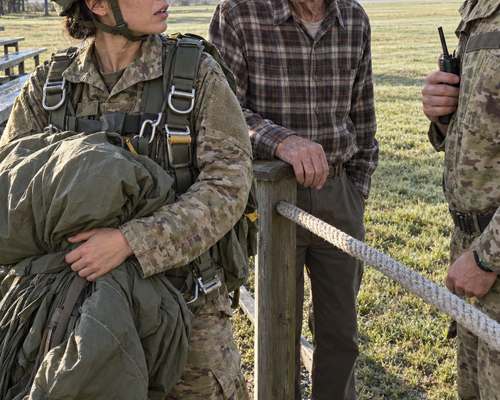
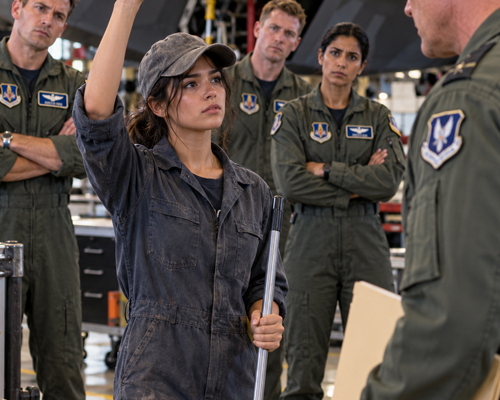
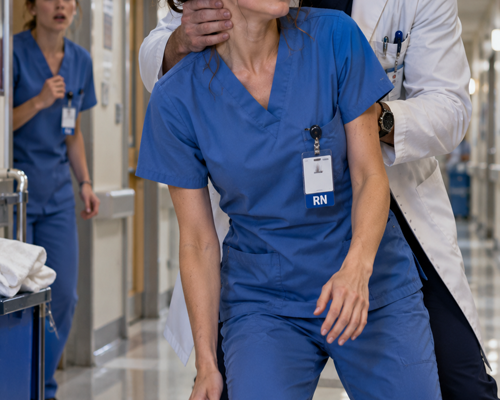
At 2:47 a.m., a stranger called our emergency room asking for a woman named “Ghost,” then demanded that the charge nurse find me within ninety seconds. My attending physician thought I was just another quiet nurse who followed orders without asking questions. Eleven minutes later, four people came through our doors, one of them barely alive, and the voice on that phone suddenly made sense…
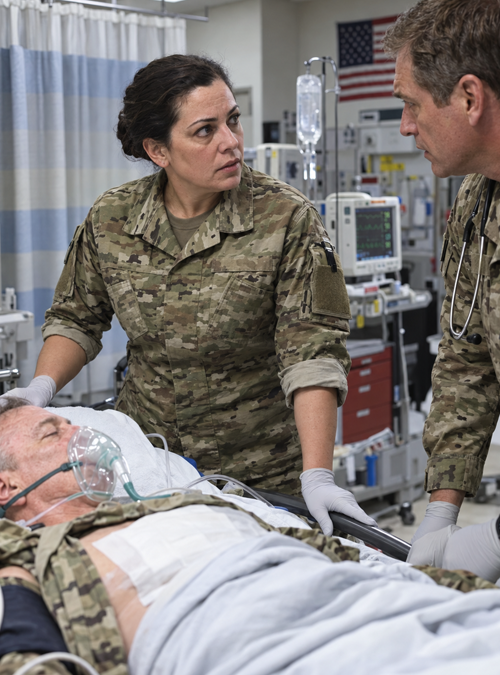
At 2:47 a.m., a stranger called our emergency room asking for a woman named “Ghost,” then demanded that the charge nurse find me within ninety seconds. My attending physician thought I was just another quiet nurse who followed orders without asking questions. Eleven minutes later, four people came through our doors, one of them barely alive, and the voice on that phone suddenly made sense…
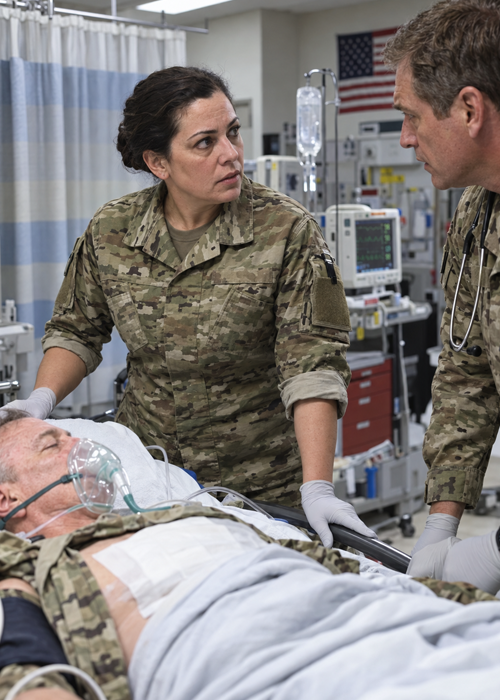
For three years, nobody at Saint Aurelius Medical Center knew why I preferred the overnight shift.
They knew my name was Elena Vasquez. They knew I was forty-four, that I wore my dark hair pulled tightly back, and that I could work through an entire twelve-hour shift without raising my voice.
They also knew I wasn’t particularly interested in talking about myself.
That was enough for most people.
I liked it that way.
Saint Aurelius wasn’t a famous hospital. We didn’t have television crews filming groundbreaking procedures or wealthy donors naming entire wings after themselves.
We were a regional medical center with aging equipment, tight staffing, and an emergency department that never seemed to have enough beds.
Our patients came because they needed help.
Some had insurance. Some didn’t. Some arrived frightened, angry, or so sick they could barely speak.
We treated them anyway.
That was one of the reasons I’d chosen to work there.
When I applied three years earlier, my résumé mentioned military nursing, federal contract work, and specialized trauma response in dangerous environments.
There were approximately ten years of my professional life summarized in language that revealed almost nothing.
The hospital reviewed my credentials.
I completed the required hiring process.
Then I accepted an ordinary staff nursing position and requested nights.
Nobody seemed especially curious.
I didn’t encourage questions.
I’d spent enough time in places where every decision carried extraordinary consequences. I wanted to work somewhere I could help people without carrying the additional weight of an entire operation.
I wanted to be Elena.
Just Elena.
Most evenings, I arrived early, checked my assignments, tied back my hair, and started working.
I wasn’t unfriendly.
I simply didn’t waste words.
If a frightened patient needed reassurance, I gave it. If a coworker needed another pair of hands, I was there before they finished asking.
And when the emergency department became chaotic, I got quieter.
People sometimes mistook that for uncertainty.
Dr. Cormac Sheehan certainly did.
He’d been the overnight attending physician for six years. He was intelligent, experienced, and usually capable of keeping a difficult department moving.
But he believed strongly in hierarchy.
Doctors made the assessments.
Nurses followed the instructions.
In his mind, anyone who questioned that arrangement was probably making a situation harder than it needed to be.
He’d worked beside me for three years without once asking much about my background.
Because I rarely challenged him in front of patients, he assumed I lacked the experience to contribute beyond my assigned responsibilities.
I’d seen the way he looked at me during trauma calls.
Reliable.
Careful.
Useful.
But never someone he would instinctively turn to for an opinion.
I knew what he thought.
I also knew he was responsible for the patients under his care.
So I did my work and left his assumptions alone.
Until one morning at 2:47 a.m.
I was in examination room seven, finishing a dressing change, when my shift took a turn I hadn’t experienced in years.
I didn’t hear the telephone ring.
Patricia Holt did.
Patricia was our charge nurse, a woman who’d spent nineteen years in that emergency department and could usually identify a genuine crisis before anyone else recognized the signs.
She answered the call expecting another patient inquiry.
Instead, a man asked for someone named Ghost.
“Ghost?” Patricia repeated.
There was no patient registered by that name.
No employee listed that way.
She was preparing to explain that he had probably reached the wrong number when the caller gave her a twelve-digit clearance code.
Then he asked for me.
By my full name.
Elena Vasquez.
According to Patricia, his voice was completely controlled.
He didn’t ask whether I was available.
He said she needed to put me on the phone within ninety seconds.
Four people would be arriving through the emergency entrance in eleven minutes.
One of them was critically injured.
And the caller believed that unless I became involved, that person might not survive.
Patricia later told me that she’d never received a call like it in her nineteen years at Saint Aurelius.
She didn’t know whether to dismiss it, contact security, or notify the attending physician.
Then she came looking for me.
I was securing the last part of a dressing when I noticed her entering the room.
Something about her face made me stop.
“Elena,” she said. “Someone called for you.”
I glanced at the patient to confirm they were comfortable.
“Who?”
“A man. He gave me some sort of clearance code.”
My hands became still.
“What did he say?”
“He asked for Ghost.”
I looked directly at her.
For a moment, I couldn’t hear the ordinary sounds of the department.
The monitor in the hallway.
A cart moving across the floor.
Someone talking near the nurses’ station.
Just that one word.
Ghost.
It had been three years since anyone had called me that.
“How many incoming?” I asked.
Patricia blinked.
“Four.”
“One critical?”
“Yes.”
“Mechanism of injury?”
“He didn’t say.”
I looked toward the hallway.
“Did he tell you anything else?”
Patricia nodded.
“He said you’d know what to do when you saw it.”
I thought about the code she’d mentioned.
The way the caller had described the arrival.
And the kind of people who would use that name instead of mine.
I knew then that something I’d left behind had found me.
“Get Dr. Sheehan,” I said.
Patricia stared at me.
“Elena?”
“Clear trauma bay one. We need the emergency thoracotomy equipment available, supplies for additional large-bore access, and whatever unallocated O-negative blood we have.”
Her expression changed.
I continued.
“Tell the team we’re expecting a critically injured patient. We don’t have time to waste.”
Patricia held my gaze for a second.
Then she nodded.
And went.
I finished making sure my patient was comfortable and stepped into the hallway.
I was already reviewing what I knew.
Four incoming.
One critical.
No mechanism disclosed.
A caller who knew my old name and believed that reaching me mattered more than explaining what had happened.
That last detail worried me.
It meant the people coming through our doors were expecting trouble.
And whoever had placed the call didn’t believe ordinary arrangements would be enough.
Patricia found Dr. Sheehan leaving examination room four.
I heard part of their conversation.
“She wants bay one cleared,” Patricia said.
“I’ll decide which bay we use,” he replied.
“She also requested emergency equipment and blood.”
“On whose authority?”
I rounded the corner.
“Mine,” I answered.
Dr. Sheehan looked at me.
“Vasquez, we’ve discussed the chain of command.”
“Yes, Doctor.”
“Then you’ll understand why I need to know who’s coming before we start moving resources.”
I understood his concern.
Our department couldn’t afford to prepare every available trauma station for an anonymous telephone threat.
But I’d recognized enough to know this wasn’t an ordinary call.
“We have four incoming,” I said. “One is critical. Bay one gives us the access we need.”
“According to whom?”
Before I could answer, the ambulance entrance doors opened.
Two men rushed through first.
Neither wore visible identification.
Both moved with the alertness of people who were still expecting danger.
Behind them came a woman in her thirties, one hand pressing a blood-soaked dressing against her side.
She was struggling to stay upright.
And directly behind her, a paramedic pushed a gurney through the entrance at a run.
A man in his mid-fifties lay on it.
His skin was almost colorless.
A packed wound covered part of his chest, and his breathing was dangerously compromised.
The oxygen saturation displayed on the paramedic’s monitor was seventy-one.
I moved toward the gurney.
“Bay one,” I said.
This time, nobody argued.
The paramedic began his report as we moved.
The patient had sustained a penetrating chest injury. The field team had packed the wound, but his condition was deteriorating despite their efforts.
I looked at the injury.
Then at his breathing.
Then at the way the tissue responded as we assessed him.
Something about the wound was horribly familiar.
I knew that pattern.
I’d seen it before.
More than once.
Dr. Sheehan came into the trauma bay behind me.
“Vasquez, step back. I need to assess him.”
I didn’t step away.
“Penetrating chest trauma,” I said. “Significant right-sided bleeding into the chest. His right lung is severely compromised.”
The doctor stopped.
I continued.
“I suspect an injury to the subclavian vessel. The packing is slowing the bleeding, but it won’t hold indefinitely.”
“You’re making that assessment without imaging?”
“We may not have time for imaging.”
I looked directly at him.
“If you’re prepared to manage a repair under these conditions, we need to move now. If not, we need to stabilize him for transfer to Mercy, thirty-one minutes away.”
The room became very quiet.
Dr. Sheehan stared at me.
“That’s not an assessment an ordinary emergency room nurse can make from a quick examination.”
“No,” I said.
My voice didn’t rise.
“It isn’t.”
For the first time in three years, he looked at me as though he realized there was something important he didn’t know.
Then he drew a breath.
“Tell me what you need.”
I turned toward the team.
And nine minutes into the fight to save that man’s life, his blood pressure collapsed.
Part 2…..
Full Story
IF FACEBOOK BROUGHT YOU HERE, HERE’S THE CONTINUATION YOU’VE BEEN WAITING FOR. ENJOY! 👇
The monitor numbers fell so quickly that one of the younger nurses looked up in disbelief.
I didn’t.
I’d seen that kind of collapse before.
It was the moment when a patient’s body had exhausted almost everything it could do to compensate for a catastrophic injury.
And it meant our margin for error had disappeared.
“He’s losing pressure,” I said.
Dr. Sheehan was already moving.
I identified the area where I believed the bleeding was coming from and explained the approach required to address it.
He listened.
Not because he’d suddenly decided I outranked him.
But because he understood that I recognized something he hadn’t encountered in quite the same circumstances.
He was still the attending physician.
The clinical decisions and procedure remained his responsibility.
But for the first time since I’d arrived at Saint Aurelius, he was treating my experience as something worth using rather than something to be managed.
“Are you certain about the vessel?” he asked.
“As certain as we can be without the imaging we don’t have time to obtain.”
His eyes met mine.
“All right.”
We continued.
I won’t describe every detail of those thirty-eight minutes.
Some memories don’t become less intense simply because you’ve survived them once.
What I remember most clearly is the sound of the room.
The monitor alarms.
The short, precise instructions.
The movement of equipment.
The controlled voices of people working together because there was no room for anything else.
Nobody was arguing about job titles anymore.
Nobody was asking why I’d recognized the injury.
A man was dying in front of us, and every person in that room had something important to contribute.
Around the ninth minute, when his blood pressure had nearly vanished, we reached the most dangerous part of the emergency.
I had already identified the suspected injured vessel.
As Dr. Sheehan proceeded, the findings confirmed what I’d told him.
The bleeding involved the subclavian region.
It wasn’t the aorta.
That distinction was one of the reasons our patient had survived long enough to reach us.
But survival wasn’t guaranteed simply because we’d identified the problem.
We still had to control it.
I watched Dr. Sheehan work.
He was a good physician.
I’d always known that.
His problem wasn’t a lack of ability.
It was that he believed the knowledge most relevant to a medical emergency would always come from the person whose title placed them highest in the room.
That belief had made him underestimate people.
Tonight, he couldn’t afford to do that.
At approximately twenty-two minutes, the repair was holding.
The patient’s pressure began climbing again.
Not quickly.
Not dramatically.
But enough that everyone in the room understood we had finally changed the direction of the crisis.
One of the nurses glanced at me.
I nodded.
“Keep watching him.”
Across the bed, Dr. Sheehan looked at me.
For a moment, his expression held a question.
I knew what he wanted to ask.
How did you know?
But there wasn’t time for that conversation.
I pointed him back toward the patient.
“We’re not finished.”
He nodded.
And we kept working.
At thirty-eight minutes, the patient was stable enough for the next stage of care.
The room didn’t erupt in applause.
Real emergency departments rarely do.
Someone checked the equipment.
Someone documented the interventions.
Another nurse began preparing the next set of observations.
Everyone returned to the practical work that follows a crisis.
But I noticed something different.
Dr. Sheehan had stopped looking at me as though I were a staff nurse who’d temporarily stepped outside her assigned place.
Now he looked at me like a colleague whose experience he needed to understand.
I pulled off my gloves.
Only then did I realize how tightly I’d been holding my shoulders.
The patient was alive.
His name, we later learned, was Thomas Arquette.
He was in his mid-fifties and worked for a federal organization that the people accompanying him had no intention of identifying.
They didn’t tell us where the injury had occurred.
They didn’t explain the circumstances that had brought him to our hospital.
And they didn’t need to.
Our responsibility was to treat the people who came through our doors.
The injured woman who’d arrived with him was also being attended to, while the two agents remained nearby, watching the hallway with the kind of attention that never quite disappears.
I recognized that watchfulness.
I’d lived with it for years.
It was one of the things I’d hoped to leave behind.
I stepped out of the trauma bay and leaned briefly against the wall.
The department was still busy.
A patient was waiting for medication.
Someone was calling for a nurse in another room.
The ambulance entrance opened again for an entirely unrelated emergency.
Saint Aurelius hadn’t stopped being Saint Aurelius because something unusual had happened.
That steadiness was strangely comforting.
Then Patricia Holt approached.
“Elena.”
I looked up.
“How is he?”
“Stable for now.”
She exhaled.
“Thank God.”
I could see the question forming in her eyes.
She had heard the caller ask for Ghost.
She’d watched my expression change.
And she’d just seen me work through a trauma that had left even our experienced attending visibly shaken.
But before she could ask anything, another vehicle arrived outside.
A man entered the emergency department wearing an ordinary dark coat.
He was tall, middle-aged, and so unremarkable in appearance that most people wouldn’t have looked at him twice.
I recognized him immediately.
Marcus Hale.
He had spent years mastering the art of entering a room without drawing attention.
And he was one of the last people I’d expected to see standing beneath the fluorescent lights at Saint Aurelius.
He approached the nurses’ station.
“I’m looking for Elena Vasquez.”
Patricia turned toward me.
I was already walking.
Marcus saw me and stopped.
For a moment, neither of us spoke.
There were years between us.
Long flights.
Temporary medical facilities.
Places where the nearest functioning hospital was far beyond the distance a critical patient could survive.
People we’d brought home.
People we couldn’t.
He looked older than I remembered.
I suppose I did too.
“Elena,” he said.
“Marcus.”
His eyes moved toward the trauma bay.
“Tom?”
I nodded.
“He’s going to make it.”
Marcus closed his eyes.
Then he let out a long breath.
It was the first time I’d ever seen him look exhausted.
“Thank you.”
I shook my head.
“The team did what he needed.”
Marcus studied my face.
“Still refusing credit.”
“Still giving it where it belongs.”
He almost smiled.
Patricia stood nearby, clearly uncertain whether she should leave us alone.
I hoped Marcus would understand.
I hoped he’d keep the conversation private.
But then he looked at her.
“The woman who just helped save Thomas Arquette’s life operated for eleven years under the call sign Ghost.”
I went still.
“Marcus.”
He continued.
“She ran trauma response across six classified operations in four countries.”
Patricia’s eyes widened.
“Marcus,” I repeated, more firmly.
He looked at me for a moment.
Then back at Patricia.
“She trained field medics for two forward units whose operations you’ll never read about.”
I looked toward the floor.
I wasn’t embarrassed by my service.
I wasn’t ashamed of the people I’d helped or the work I’d done.
But I’d spent three years building a quiet life.
And Marcus was opening a door I’d deliberately kept closed.
He continued, though he didn’t describe the operations themselves.
“She left federal service three years ago. She didn’t ask for a public commendation or special recognition.”
Patricia looked at me.
“Elena?”
I said nothing.
Marcus’s voice softened.
“She asked to work as a nurse in an emergency department.”
He glanced around Saint Aurelius.
“So that’s what she did.”
There was a long silence.
Then Patricia whispered, “Ghost?”
I looked up.
“That was a long time ago.”
She stared at me.
“I’ve worked beside you for three years.”
“I know.”
“And you never said anything?”
I considered how to answer.
Because it wasn’t quite true that I’d hidden everything.
My résumé had contained the broad outline.
I’d been open about the work I could document.
I’d complied with every credentialing requirement.
But I hadn’t volunteered stories.
And nobody had asked.
“I came here to be a nurse,” I said.
Patricia looked as though she was trying to reorganize everything she thought she knew about me.
Then she glanced toward the trauma bay.
“You could have worked somewhere else.”
“Probably.”
“Somewhere with better equipment. Better staffing.”
I looked down the hallway.
A patient was waiting anxiously for test results.
Another was sleeping beneath a hospital blanket.
Near the nurses’ station, a colleague was trying to help an elderly man understand his discharge instructions.
“This is where I wanted to work.”
Patricia was quiet.
I continued.
“People here need the same things people need everywhere else. Someone who listens. Someone who knows what they’re doing. Someone who stays when things get difficult.”
She looked at me for a long time.
Then she nodded.
“I suppose they do.”
Behind her, I saw Dr. Sheehan standing near the entrance to trauma bay one.
He’d heard enough.
I could tell by his expression.
Marcus noticed him too.
But he didn’t say anything more.
He simply placed a hand briefly on my shoulder.
“I’m glad you’re here, Elena.”
I looked at him.
“So am I.”
He stepped away to speak with the agents waiting near the entrance.
And suddenly I was left facing the conversation I’d managed to avoid for three years.
Dr. Sheehan approached slowly.
He wasn’t carrying a chart.
He wasn’t preparing to give an instruction.
He simply stopped in front of me.
“I’ve been running nights here for six years,” he began.
I waited.
“I’ve made assumptions about people based on what I could read in their personnel records.”
He looked toward the trauma bay.
“Or what I thought I understood about their place in this department.”
I said nothing.
He continued.
“I made those assumptions about you.”
His voice was quieter than usual.
“I saw a competent nurse who rarely challenged my decisions. I took that to mean you didn’t have much experience beyond what I saw here.”
I folded my arms loosely.
“That’s what you believed.”
He nodded.
“It was.”
For a moment, he looked uncomfortable.
Then he met my eyes.
“That was my failure, Elena. Not yours.”
I didn’t know what I’d expected him to say.
An excuse, perhaps.
Something about difficult circumstances.
Something about the importance of following hospital procedure.
But he offered none of those things.
Instead, he acknowledged what had happened.
I appreciated that.
I also knew one extraordinary night didn’t erase three years of assumptions.
He would need to change the way he worked with people.
And I would need to decide whether I trusted that change.
For now, though, I remembered what had happened when the patient arrived.
When it mattered most, he’d listened.
“You made a good call tonight,” I told him.
He looked surprised.
“You were willing to use the information you had, even though it didn’t come from where you expected.”
He considered that.
Then nodded.
“I almost didn’t.”
“But you did.”
We stood quietly.
There was more he could have said.
There was more I could have said.
But I didn’t need an apology performed in front of the department.
And he didn’t need me to turn the moment into a lesson about his inadequacy.
What mattered was what he would do afterward.
He glanced toward trauma bay one.
“I’d like to understand more about your experience someday.”
I looked at him.
“Some of it isn’t mine to discuss.”
“I understand.”
“But we can talk about the work we do here.”
He nodded.
“I’d like that.”
Then an alarm sounded farther down the hall.
Another patient needed attention.
I straightened my scrubs.
“Looks like we’re needed.”
Dr. Sheehan gave a tired smile.
“Lead the way.”
I walked toward the next room.
And the hospital returned to its ordinary rhythm.
Marcus didn’t stay long.
The federal personnel who’d accompanied Thomas Arquette remained focused on his recovery and whatever responsibilities had brought them there.
They offered no public explanation of the operation.
I didn’t ask for one.
I knew enough about Marcus to understand that he hadn’t appeared at Saint Aurelius merely because he wanted to visit an old colleague.
He’d come because someone he cared about was fighting to survive.
And because he knew there was one person working nights in that hospital who might recognize the injury pattern immediately.
That was a strange feeling.
I’d spent three years trying to separate myself from my previous life.
Yet when that life suddenly reached me, I’d responded without needing to think about what name I was using or what title I held.
I was still the same person.
The experience hadn’t disappeared.
I’d simply chosen a different place to use it.
Before Marcus left the following morning, he returned to the nurses’ station.
Patricia was organizing supplies.
He placed a small laminated card on the counter.
No official agency seal.
No letterhead.
Nothing identifying where it had come from.
One side held the twelve-digit code from the telephone call.
The other side contained two words.
Call her.
Patricia studied the card.
Then she looked up.
“What am I supposed to do with this?”
Marcus answered quietly.
“Keep it somewhere safe.”
She glanced toward me.
I shook my head slightly.
“This isn’t going on the staff bulletin board.”
Marcus almost laughed.
“No. It isn’t.”
Patricia opened the upper drawer of the nurses’ station.
She slipped the card beneath a roll of tape and several spare pens.
Then she closed the drawer.
She didn’t announce its existence.
She didn’t show it around the department.
And nobody asked her to.
It was an unusual object to leave behind.
But I understood what it meant.
The people who had needed help that night hadn’t forgotten where they’d found it.
And Patricia had chosen to keep a way for them to reach me again.
After Marcus left, I went back to work.
There were patients to assess.
Medications to administer.
Family members who needed answers.
And a staff struggling to get through another understaffed night.
I didn’t feel transformed.
I didn’t suddenly want a different job.
I still preferred the overnight rotation.
I still wore my hair pulled back.
I still liked the quiet moments before sunrise, when the department briefly seemed to take a breath before the next wave of patients arrived.
But something had changed around me.
The younger nurses asked more questions.
Not about classified operations.
About clinical judgment.
About why I noticed certain things during an assessment.
About how to stay calm when several emergencies arrived at once.
I answered what I could.
And when I didn’t know something, I said so.
That surprised a few of them.
One nurse looked at me after I admitted I hadn’t encountered a particular problem before.
“I thought you knew everything.”
I laughed.
“That’s a dangerous thing to think about anyone.”
She smiled.
“Even Ghost?”
“Especially Ghost.”
I didn’t want people making the opposite mistake from Dr. Sheehan.
He’d underestimated me because of my job title.
Now some of the staff were tempted to believe my past made me incapable of error.
Neither assumption helped patients.
I wanted them to understand that experience mattered.
So did training.
So did asking questions.
So did listening when someone else knew something you didn’t.
A department couldn’t run safely if everyone waited for one person to have every answer.
Two weeks after Thomas Arquette arrived, Dr. Sheehan asked to meet with me.
I expected another conversation about the trauma.
Instead, he showed me a draft document.
It proposed changing how Saint Aurelius gathered information about incoming staff.
Not the ordinary credentialing paperwork.
That already existed.
This was a structured conversation meant to identify relevant experience that might not be obvious from a standard résumé.
Prior field work.
Unusual emergency experience.
Skills developed in environments unlike a conventional hospital.
Knowledge that might be useful in difficult cases but could otherwise go unnoticed.
I read the document carefully.
“You’re proposing this for everyone?”
He nodded.
“Doctors, nurses, incoming clinical staff. As appropriate to their roles.”
“Why?”
He looked at me.
“Because I spent three years working beside you and never thought to ask what you knew.”
I turned another page.
He continued.
“I don’t want someone else making the same mistake.”
I appreciated that he wasn’t proposing to give anyone authority they hadn’t earned or credentials they didn’t possess.
He was proposing that we learn more about the people already working beside us.
That seemed reasonable.
We spent time reviewing the wording.
I suggested questions that would encourage people to describe their relevant experience without pressuring them to reveal details they couldn’t share.
He listened.
He took notes.
And when I disagreed with something, he didn’t treat the disagreement as a challenge to his position.
We worked through it.
At the end of the meeting, he showed me the final page.
My name was listed as a contributor.
I looked at him.
“Can you remove that?”
He frowned.
“Elena, you helped write it.”
“I know.”
“You deserve credit.”
I smiled slightly.
“Then let the protocol work. That’s enough for me.”
He studied me.
Then nodded.
“All right.”
He removed my name.
And he submitted the proposal.
It wasn’t a spectacular change.
There were no reporters.
No ceremony.
No speeches about what a remarkable nurse had been hiding in the overnight department.
Just a practical effort to make sure people were better understood before their knowledge was needed in an emergency.
That suited me perfectly.
Over the following weeks, Saint Aurelius settled into its usual routine.
Some shifts were calm enough that we could actually finish documentation before sunrise.
Others were so busy that we barely noticed the hours passing.
Dr. Sheehan began asking for input more often.
Not just mine.
He asked Patricia what she’d noticed.
He invited experienced nurses to share observations.
He listened when younger staff members raised concerns.
He was still direct.
Still demanding.
Still entirely capable of becoming irritated when the department was overwhelmed.
But he was changing.
Not because somebody had humiliated him.
Because he’d recognized a limitation in the way he understood the people around him.
I respected that.
One evening, while I was preparing for my shift, I rolled up my sleeve.
There was a small scar on the inside of my right forearm.
Three short parallel lines.
An old field mark from an operation I would never describe.
For years, I’d kept it covered whenever possible.
Not because it was ugly.
Because it attracted questions.
That evening, I looked at it for a moment.
Then I left my sleeve where it was.
There was no great decision behind it.
I simply didn’t feel the same need to hide every visible reminder of my past.
Later, a new nurse noticed it while we were restocking supplies.
“What happened to your arm?”
I glanced down.
“Old work.”
She waited, apparently expecting more.
I smiled.
“Very old work.”
She nodded.
Then she handed me a packet of supplies.
And we continued preparing the room.
That was enough.
I still didn’t tell stories about classified operations.
I didn’t discuss places where I’d worked or people I’d treated when sharing those details could compromise someone else’s privacy.
I didn’t use the name Ghost to impress anyone.
Most nights, nobody mentioned it at all.
And I was grateful.
Because the strange thing about what happened at Saint Aurelius was that it didn’t make me feel more important than I’d felt before.
It reminded me why I’d chosen to become a nurse in the first place.
There was a time when I’d believed every patient I treated might be part of something much larger than the room we were standing in.
A mission.
An operation.
A situation with consequences that stretched far beyond the injured person in front of me.
That work mattered.
I knew it did.
But so did the work at Saint Aurelius.
The person who arrived frightened and alone.
The elderly patient who needed someone to explain what was happening.
The family member waiting for news.
The stranger who couldn’t afford to seek care anywhere else.
Their lives weren’t less important because their injuries weren’t connected to a classified operation.
And the people caring for them weren’t less capable because their names didn’t appear in some federal record.
That’s what I wished Dr. Sheehan had understood sooner.
And what I hoped the younger nurses would understand without having to learn it the hard way.
One night, Patricia and I were sitting near the nurses’ station during a rare quiet moment.
She was organizing paperwork.
I was checking a patient chart.
The clock read 2:47 a.m.
Patricia glanced at it.
Then at me.
“Remember what happened at this time a few weeks ago?”
I looked toward the telephone.
“Hard to forget.”
She smiled.
“I still can’t believe I answered that call.”
“You’ve answered thousands.”
“Not like that one.”
I closed the chart.
She hesitated.
“Can I ask you something?”
“Sure.”
“Why did you choose this hospital?”
I thought about the question.
It was one I could have answered in several ways.
I could have talked about being tired.
About wanting a different rhythm.
About needing distance from the kind of work where people communicated in clearance codes and callsigns.
All of that would have been true.
But it wasn’t the whole answer.
“Because people need good care here,” I said.
Patricia watched me.
“And you didn’t want to work somewhere more prestigious?”
“Prestige wasn’t what I was looking for.”
“What were you looking for?”
I glanced toward the hallway.
A patient had finally fallen asleep after a difficult night.
One of the younger nurses was quietly adjusting the lights outside the room so they wouldn’t wake him.
I smiled.
“Something like this.”
Patricia followed my gaze.
Then she nodded.
“I think I understand.”
She opened the top drawer to find a pen.
For a moment, I saw the laminated card resting beneath the tape.
Twelve digits on one side.
Two words on the other.
Call her.
Patricia noticed me looking.
She gently pushed the drawer closed.
Neither of us said anything more.
A few minutes later, another patient arrived.
I stood.
Pulled on my gloves.
And went to work.
There was no dramatic soundtrack.
No announcement.
No reason for anyone to know that the quiet nurse walking toward the next room had once answered to a name used in places most people would never hear about.
I was Elena Vasquez.
Forty-four years old.
An emergency room nurse at Saint Aurelius Medical Center.
I worked nights.
I listened carefully.
I did the best work I could with the people beside me.
And that was the life I’d chosen.
People sometimes imagine courage as something loud.
Someone charging into danger.
Someone giving a speech.
Someone whose name becomes famous because they were extraordinary at the right moment.
I’ve known people like that.
Some of them deserved every bit of recognition they received.
But I’ve also known courage that looked much quieter.
A nurse staying late because a frightened patient needed someone familiar.
A doctor admitting he’d made a mistake.
A charge nurse answering a strange call and taking it seriously.
A young colleague asking a question instead of pretending to understand.
A team willing to listen when the person with the most relevant experience wasn’t the person with the highest title.
Those decisions rarely make headlines.
But they matter.
Sometimes more than anyone realizes.
For three years, my coworkers saw a quiet woman who took the overnight shift and rarely talked about her past.
Some assumed that meant I had little to say.
Others thought I was simply comfortable staying in the background.
They weren’t wrong about everything.
I did prefer the background.
I still do.
But they didn’t know the entire person standing beside them.
And I hadn’t known every part of their stories either.
That was the lesson I took from the night Marcus Hale returned.
A person’s title may tell you what they’re responsible for, but it doesn’t tell you everything they’ve survived, learned, or become capable of doing.
Sometimes the person standing quietly at the edge of the room is exactly who you need when everything goes wrong.
And sometimes that person doesn’t want a medal, a promotion, or a room full of applause.
Sometimes she just wants to finish her shift, make sure her patients are safe, and come back tomorrow.
That’s enough for me.
My name is Elena Vasquez.
Once, a handful of people knew me as Ghost.
These days, most people simply call me Nurse Elena.
And I wouldn’t trade that for anything.
THE END.