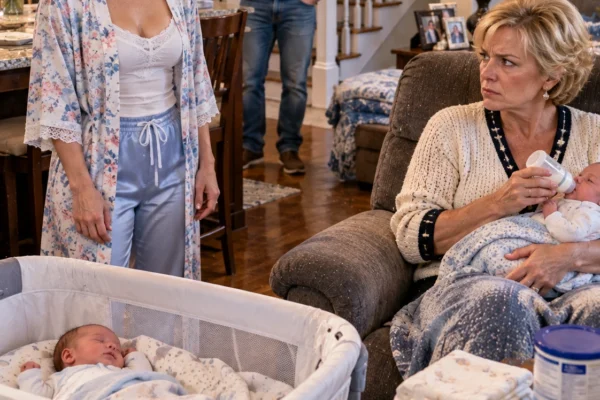
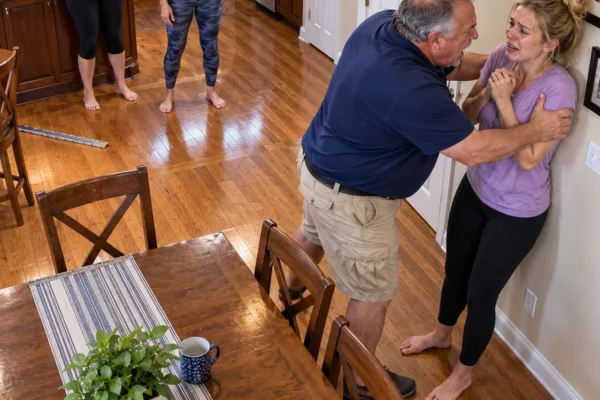
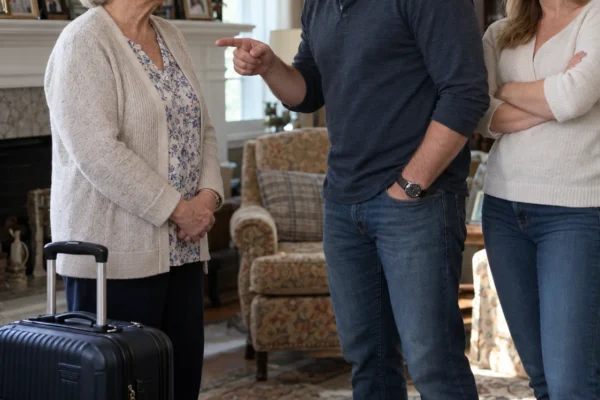
“Who gave you permission to rename my baby?” I demanded after waking from emergency surgery and finding Margaret on my newborn’s bassinet. My mother-in-law had announced the name online before I even held my daughter. Then hospital records exposed a signature my husband desperately wanted to explain….
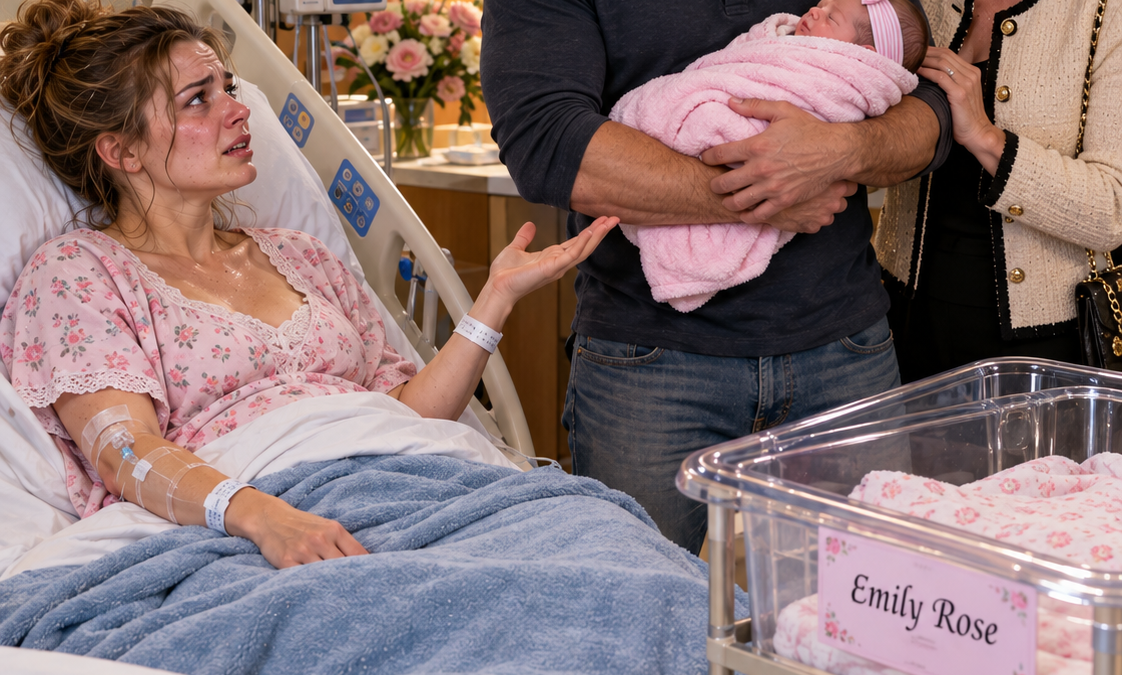
Chapter 2: The 2:14 A.M. Worksheet
By morning, Daniel had given me three explanations.
The first was that the hospital must have made a mistake.
That explanation lasted until I asked why Peggy had already ordered an embroidered blanket.
Then he suggested I might have agreed to Margaret while medicated.
“I didn’t.”
“You were in and out of it.”
“I didn’t.”
“Sarah, you don’t remember everything.”
“You’re right.”
His shoulders loosened slightly.
“That’s why I want the records.”
His face closed again.
The third explanation came twenty minutes later.
“It doesn’t have to matter this much.”
I laughed.
The movement hurt enough that I had to press a pillow against my incision.
“We can call her Eleanor at home,” Daniel said.
I stared at him.
“At home?”
“That’s not what I meant.”
“So doctors, schools, strangers and the government can call her Margaret, but inside my own house I’m allowed to use the name we chose?”
“Sarah—”
“Say what you mean.”
He couldn’t.
The patient advocate arrived shortly before ten.
Her name was Karen, and she wore reading glasses on a chain and the careful expression of someone entering a room where every word mattered.
I explained that five weeks before delivery I had completed the hospital’s pre-registration birth worksheet myself.
The name was Eleanor Rose Lawson.
Karen checked my chart and left.
Peggy arrived forty minutes later carrying flowers, two coffees and a balloon that said GRANDMA’S GIRL.
She handed one coffee to Daniel.
“I hope everyone’s calmer today.”
“You changed my daughter’s name.”
“I filled out no paperwork.”
Daniel’s jaw tightened.
Technically true.
“And frankly,” Peggy continued, “after the anesthesia, hormones and blood loss, I think everyone should be careful about upsetting you.”
“Don’t.”
She blinked.
“Excuse me?”
“Don’t use my medical emergency to make me sound confused.”
“I never said you were confused.”
“You just listed reasons I shouldn’t trust my own memory.”
Karen returned before Peggy could answer.
She closed the door.
“We found your original worksheet.”
My fingers tightened around Eleanor’s blanket.
“What does it say?”
“Eleanor Rose Lawson.”
Peggy’s expression shifted.
Karen continued.
“There is also a second worksheet associated with your delivery admission.”
“When?”
She checked her tablet.
“2:14 a.m.”
I went cold.
“What time was I in special monitoring?”
“You were still there.”
Daniel stood.
“This is getting blown out of proportion.”
Karen ignored him.
“The second worksheet states Margaret Lawson, and the note says, ‘Father states parents have changed name choice.’”
I looked at Daniel.
Karen continued.
“The paperwork contains Mr.
Lawson’s signature.”
“Did I sign anything?”
“No.”
“Was I there?”
“No.”
Daniel rubbed both hands over his face.
“I thought—”
“You told them we changed our minds.”
“I was trying to handle everything.”
“I was bleeding.”
His mouth closed.
Peggy folded her arms.
“You’re behaving as though he sold the baby.”
“He signed a different name while I was recovering from a hemorrhage.”
“A name doesn’t change who she is.”
“Then why did you need yours so badly?”
Peggy went silent.
Karen said the hospital would investigate how the replacement worksheet had been accepted and determine what had already been transmitted.
After she left, Peggy began arranging the flowers.
“Margaret was my mother’s middle name too.”
“I don’t care.”
“My mother died when I was nineteen.”
For one second, her voice softened.
Then she looked at Eleanor.
“Women disappear in families, Sarah.”
I thought about my own mother.
“That is exactly why I chose Eleanor.”
“And what about me?”
“What about you?”
“I’m still here.”
Her eyes filled.
“I came to appointments, brought meals, helped you and Daniel build a future.”
Before I could ask what she meant, Emily called.
“Sarah, I’m at your house getting your nursing pillow.”
“Okay.”
There was a pause.
“Did you change the nursery?”
My stomach tightened.
“No.”
A photograph arrived.
For months, the wooden sign I painted by hand had hung above the crib.
Eleanor Rose.
It was gone.
Gold letters had been attached to the wall instead.
MARGARET.
Emily sent another photograph.
My sign was face-down in the garage beside a cardboard box marked DONATE.
I turned the phone toward Peggy.
“You went into my house.”
“I have a key.”
“You took down my daughter’s name.”
“I wanted things ready when you came home.”
“You put my sign in a donation box.”
Peggy stared at the photograph.
She didn’t apologize.
I pressed the nurse button again.
When the nurse entered, I handed Eleanor carefully to her.
Then I pointed toward Peggy.
“I want her removed from my visitor list.”
Peggy’s face changed.
“Sarah.”
“And I want security told she is not authorized to take my baby anywhere.”
Daniel stared at me.
Peggy laughed once in disbelief.
“You cannot be serious.”
“I almost died yesterday.”
My voice was shaking, but the words weren’t.
“I’m done letting other people decide what I’m too weak to object to.”
Chapter 3: What Daniel Signed Away
Peggy stood in the middle of my hospital room for several seconds as though she expected everyone to recognize that I had made an absurd joke.
Nobody did.
The nurse stepped toward the door.
“Mrs.
Lawson, if the patient is asking you to leave, I need you to leave.”
Peggy looked at Daniel.
He said nothing.
That hurt almost as much as everything else.
“You’re actually allowing this?” she asked him.
Daniel pressed his lips together.
“Mom, just go for now.”
“For now?”
“Please.”
Peggy picked up her purse so sharply that one of the flower stems fell from the table.
She looked at me before leaving.
“When you’re thinking clearly, you are going to regret making family into the enemy.”
The door closed behind her.
I stared at it.
Then I looked at Daniel.
“Give me your house key.”
His eyebrows lifted.
“What?”
“Your mother has a key to our house.”
“You know she does.”
“I knew she had one for emergencies.”
“She helps with things.”
“She entered our house while I was in surgery and replaced our daughter’s name.”
Daniel lowered his voice.
“I’ll talk to her.”
“That isn’t enough.”
“What do you want me to do from here, Sarah?”
It was the first useful question he had asked.
“I want the truth.”
He looked exhausted.
His hair was greasy, his T-shirt was wrinkled, and purple shadows sat beneath his eyes.
For a second I could see the man who had spent thirty-one hours beside me in labor and had cried when the surgeon said our baby was breathing.
Then I remembered the signature at 2:14 a.m.
“When did your mother decide she was naming our daughter Margaret?”
“She didn’t decide.”
“She embroidered a blanket.”
Daniel sat down.
“She’s mentioned the name before.”
“How many times?”
“I don’t know.”
“How many?”
“A lot.”
I waited.
“Since we told her you were pregnant.”
That answer landed harder than I expected.
Peggy had suggested names in front of me, but always as jokes.
Margaret.
Maggie.
Little Peggy.
I had laughed them off because Daniel laughed too.
We had already chosen Eleanor before we announced the pregnancy.
“You knew she was serious.”
Daniel stared at his hands.
“Yes.”
“And you never told me.”
“I told her no.”
“That wasn’t my question.”
“She kept bringing it up.”
“Why?”
He let out a long breath.
“Because she wanted someone named after her.”
“That explains what she wanted.”
I shifted carefully against the pillows.
“It doesn’t explain why you signed.”
Eleanor made a small sound against my chest.
Daniel stood automatically, then stopped himself.
I adjusted her blanket.
“Tell me exactly what happened.”
He was quiet for so long that I thought he might refuse.
Then he said, “After they took you back because your pressure dropped again, I was with the baby.”
“Eleanor.”
He flinched.
“Yes.”
“And?”
“Mom came back to the hospital.”
“At two in the morning?”
“She never left.”
Of course she hadn’t.
Daniel continued.
“I was scared.”
His voice cracked slightly.
“They kept saying you were stable, but every time someone walked through those doors I thought they were coming to tell me you weren’t.”
I believed that part.
I had seen fear on his face in the fragments I remembered from surgery.
“What does that have to do with the name?”
“Mom started talking.”
“About Margaret.”
He nodded.
“She said life was short.”
I stared at him.
“She said after almost losing you, family should mean more than arguments over names.”
“That sounds like her.”
“She said Eleanor honored your mother and Margaret could honor mine.”
“Our daughter has one first name.”
“I know.”
“You knew then too.”
Daniel looked away.
“She kept saying she had done everything she could for us.”
There it was again.
Helping us build a future.
“What exactly does she think we owe her?”
Daniel’s shoulders slumped.
“Sarah.”
“How much?”
“It isn’t like that.”
“Then explain it.”
When we bought our house two years earlier, Daniel and I had been short on closing costs after the inspection uncovered plumbing repairs.
Peggy had given us eight thousand dollars.
She had called it a gift.
She had refused the repayment plan I offered.
Family helps family, she had said.
She had also bought our crib, paid for half the baby shower and volunteered to provide two days of childcare each week when I returned to work.
None of that had seemed sinister.
Until now.
“She said if her help meant nothing, then maybe she had been stupid,” Daniel said.
I stared at him.
“So she used money.”
“She didn’t threaten me.”
“She reminded you what she paid for while asking you to give her my daughter’s first name.”
“That’s not exactly—”
“That is exactly what you just described.”
Daniel pressed both palms to his knees.
“I was exhausted.”
“I had just had my abdomen cut open.”
“I know.”
“I had lost enough blood to need transfusions.”
“I know.”
“You were tired.”
His face tightened.
“I know how that sounds.”
“It sounds like you decided your discomfort was more urgent than my consent.”
He looked up.
“I thought we could fix it later.”
That stopped me.
“What?”
“I thought if I signed it, Mom would calm down.”
I could barely believe the sentence.
“You knowingly put the wrong name on the paperwork because you thought we could fix it later?”
He spoke faster.
“I thought maybe it wasn’t final.”
“Then why didn’t you tell me?”
“I was going to.”
“When?”
“When you were stronger.”
“After your mother announced Margaret to everyone?”
“I didn’t know she was going to post that.”
“But you knew what you signed.”
“Yes.”
I looked down at Eleanor.
Her tiny fingers had escaped the blanket.
I touched one with mine.
“What did your mother say when you hesitated?”
Daniel swallowed.
“She said you wouldn’t care after what happened.”
For a moment, the room seemed very quiet.
“She said almost dying would make me care less about my own daughter’s name?”
“She said you would care more about all of us being together.”
“No.”
My voice came out low.
“She thought almost dying would make me easier to overrule.”
Daniel’s eyes filled.
“I’m sorry.”
I had wanted those words since waking up.
Hearing them did not help.
Karen returned that afternoon with a representative from medical records.
The second worksheet had been entered into the hospital system, but the final state record had not yet been completed.
“There is a correction process,” the representative said.
“Can we change it back to what I originally submitted?”
“We can document that the second submission did not reflect your stated choice, and we can prepare corrected paperwork.”
I pointed at Daniel.
“What does he have to do?”
“He needs to cooperate with the correction and sign the updated parental acknowledgment.”
Daniel spoke before I could.
“I will.”
The representative nodded.
“We also need to review why a replacement name worksheet was accepted under these circumstances.”
“Will the bassinet card be changed?”
“Yes.”
I hadn’t realized how badly I needed to hear that.
A nurse returned twenty minutes later carrying a new card.
ELEANOR ROSE LAWSON.
7 LBS 4 OZ.
GIRL.
She slid it into the bassinet holder.
I cried again.
This time Daniel didn’t touch me.
He stood beside the window and cried quietly too.
Later, Emily arrived with clean clothes, my nursing pillow and the wooden sign from the garage.
She leaned it against the wall beside my bed.
Daniel stared at it.
The cream roses I had painted around the letters looked slightly chipped near one corner.
“Mom did that?”
Emily looked at him.
“You’re asking now?”
He lowered his head.
Emily came to my bedside.
“I changed the garage code.”
“Thank you.”
“I also called a locksmith.”
Daniel looked up.
“You changed the locks?”
“I asked her to,” I said.
“Sarah, I live there too.”
“And your mother had unrestricted access because you kept telling me she was helping.”
“She was helping.”
“Helping does not mean ownership.”
Emily folded her arms.
Daniel looked between us.
“I can get her key back.”
“That key no longer matters.”
“You should have talked to me.”
The words were out before he seemed to hear them.
Emily actually laughed.
I didn’t.
“You signed away the name we chose while I was unconscious.”
Daniel closed his eyes.
“I walked into that one.”
“No.”
I shifted Eleanor higher against my chest.
“You walked into this one at 2:14 yesterday morning.”
He sat down again.
I took my wedding ring off.
My fingers were swollen, so it took several painful seconds.
I placed it on the tray beside my water cup.
Daniel stared at it.
“I’m not deciding our entire marriage from a hospital bed,” I said.
His face changed.
“But you’re not coming home with me tomorrow.”
“Sarah.”
“I need to recover.”
“I can take care of you.”
“I don’t trust you to protect decisions we make together when your mother wants something else.”
He looked as if I had slapped him.
Maybe because he knew I was right.
“You can visit Eleanor here,” I said.
“You can be her father.”
“I want to be your husband too.”
“Then you need to figure out why being Peggy’s son mattered more than being my husband when I couldn’t defend myself.”
He stared at the ring.
I expected him to argue.
Instead, he whispered, “Okay.”
That evening, Peggy called the room three times.
The nurse blocked the calls.
At 8:43 p.m., my phone buzzed with a message from an unknown number.
It was Daniel’s aunt.
Your mother-in-law is devastated.
I hope when you are feeling better you will reconsider punishing her over a name.
I read it once.
Then I opened Facebook.
Peggy’s original announcement was still there.
But she had added something new.
Some people forget who was there for them long before they needed help.
I looked at the sleeping baby in my arms.
Then I opened a family group chat that included both sides of our families.
My fingers shook as I typed.
Our daughter’s name is Eleanor Rose Lawson.
The hospital is correcting paperwork submitted without my knowledge while I was receiving emergency medical care.
Any announcement stating otherwise was not authorized by me.
I will not discuss this further while I recover.
I pressed send.
Then I turned off my phone.
For the first time since I woke up, I stopped trying to convince anyone that my daughter’s name mattered.
I had already said what it was.
The next question was whether the people around me were capable of respecting it.
Chapter 4: The House I Came Home To
I was discharged three days after Eleanor was born.
Daniel arrived at nine in the morning with the car seat we had practiced installing twice before my due date.
Emily arrived five minutes later with my coat.
Daniel looked at her.
“I thought I was driving them home.”
Emily looked at me.
I shook my head.
“I’m driving,” she said.
Daniel’s jaw tightened.
“I’m her husband.”
“And I’m the one recovering from surgery,” I said.
A nurse wheeled me toward the exit while Daniel carried Eleanor’s diaper bag beside us.
He didn’t argue again.
At the curb, he secured Eleanor into the car seat himself.
He checked every strap twice.
When he finished, he rested his hand briefly on the handle.
“Can I come over later?”
“Not today.”
His face fell.
“Tomorrow?”
“We’ll talk tomorrow.”
He nodded.
Then he bent toward Eleanor.
“Bye, sweetheart.”
He did not call her Margaret.
It was a very low bar.
At that point, I noticed every time he cleared it.
The first thing I saw when Emily opened my front door was the blank space above the crib.
The locksmith had changed both exterior locks.
Emily had removed the gold MARGARET letters from the nursery wall, but faint marks remained in the paint.
My original wooden sign sat on the dresser.
“I didn’t put it back up because I wanted you to decide where it went,” she said.
I touched the edge.
“Above the crib.”
“You sure?”
“That’s where it belongs.”
Emily found the step stool.
I sat in the rocking chair holding Eleanor while she rehung the sign.
When it was finished, I stared at my daughter’s name until the letters blurred.
Eleanor Rose.
Not because paperwork said it.
Not because my mother-in-law approved.
Because it was the name Daniel and I had chosen together before he betrayed the choice.
The distinction still hurt.
That first night home was brutal.
Eleanor wanted to eat every two hours.
My milk had barely started coming in after the hemorrhage.
My abdomen hurt every time I stood.
Emily slept on the couch and woke whenever she heard me moving.
At 3:17 a.m., she found me crying in the kitchen because I had dropped a clean bottle nipple on the floor and could not bend down to pick it up.
She picked it up.
“You don’t have to prove anything.”
“I know.”
“You look like you’re trying to win a competition nobody entered.”
“I don’t want anybody deciding I can’t handle my own baby.”
Emily rinsed the nipple and put it in the sterilizer.
“That’s Peggy talking.”
I looked at her.
“She doesn’t have to be in the room to make you mad anymore.”
I hated that she was right.
The next afternoon, Daniel came over.
He brought groceries, postpartum pads, the pain medication refill the pharmacy had prepared and a folder from the hospital.
He stopped at the front door.
“You changed the lock.”
“I told you we were.”
“I know.”
He held up his hands.
“I’m not arguing.”
Emily opened the door wider.
He stepped inside.
For the next two hours, he behaved like a guest in his own house.
He washed bottles.
He changed Eleanor.
He brought me water before I asked.
He did not mention Peggy.
Eventually I did.
“Where are you staying?”
“At Mom’s.”
I almost laughed.
“Of course.”
“It was that or a hotel.”
“You could afford a hotel for a few nights.”
“I know.”
“Then why are you staying there?”
He put down the bottle brush.
“I thought maybe I could talk to her.”
“Have you?”
“Yes.”
“And?”
He looked tired.
“She thinks you humiliated her.”
I waited.
“I told her she humiliated you first.”
That surprised me enough that I said nothing.
Daniel continued.
“She says she was trying to honor family.”
“By entering my house and throwing my work in a donation box.”
“I know.”
“By having you lie to hospital staff.”
“I know.”
“By posting my child online before I held her.”
“I know.”
His voice broke on the third one.
I looked away.
“What did she say about that?”
“She said everyone posts newborn pictures.”
“Not everyone posts somebody else’s newborn using a name the mother never agreed to.”
“I told her to delete it.”
“Did she?”
“No.”
There it was.
“And what did you do?”
“I told her I wouldn’t stay there if she kept it up.”
I looked at him.
“You’re still staying there.”
“I packed my stuff this morning.”
“Where are you going?”
“I found a short-term rental near work.”
It was the first concrete thing he had done that cost him something.
Not enough.
But something.
He handed me the hospital folder.
“The correction paperwork is signed.”
I opened it.
His signature appeared beneath the corrected name.
Eleanor Rose Lawson.
“I also wrote a statement about what happened.”
“For the hospital?”
“Yes.”
“What did you say?”
“The truth.”
I waited.
He swallowed.
“That you did not authorize the change, that I told the clerk we had changed our minds when we hadn’t, and that I signed it.”
I looked at him.
“Did your mother tell you to lie?”
He hesitated.
“She said to tell them we had discussed it.”
“Had we?”
“We had discussed her wanting Margaret.”
“That is not the same thing.”
“I know.”
“Daniel.”
His eyes met mine.
“Yes.”
“Did she tell you to say I agreed?”
“She said they wouldn’t ask many questions if I said it was a joint decision.”
I felt my hand tighten around the folder.
There it was.
Not a grand conspiracy.
Not an elaborate plan.
Just Peggy pushing until her exhausted son chose the easier lie.
And Daniel deciding that because I wasn’t present, my no could temporarily become a yes.
“That’s what I needed you to admit.”
“I’m sorry.”
“I know you’re sorry.”
I closed the folder.
“I don’t know if sorry fixes this.”
“I know.”
“No, I don’t think you do.”
I shifted carefully on the couch.
“You keep acting like the problem is that you signed the wrong name.”
“That is the problem.”
“It’s part of it.”
He waited.
“The real problem is that when your mother wanted something badly enough, you decided I could be overruled if I wasn’t there to object.”
His face went still.
“If this had been the pediatrician, would you have let her change doctors because I was asleep?”
“No.”
“If it had been religion?”
“No.”
“School?”
“No.”
“Where exactly was the line, Daniel?”
“I don’t know.”
“That’s why I’m scared.”
Eleanor began crying in the bassinet.
Daniel reached for her.
I let him.
He lifted her against his chest and walked slowly across the room.
“I need you to understand something,” he said.
“I’m listening.”
“I didn’t choose the name because I secretly wanted Margaret.”
“I know.”
“I chose the easiest way to stop Mom from pushing me.”
“That is not better.”
“I know.”
He looked down at Eleanor.
“I have spent my whole life doing that.”
The admission was quiet.
“My dad used to say Mom could turn a five-minute disagreement into a five-week war.”
Peggy’s husband had died six years earlier.
Daniel rarely talked about him.
“So everyone gave in.”
“Usually.”
“And you thought I would too.”
He looked at me.
“I thought you’d be furious.”
“But?”
“I thought eventually you would decide it wasn’t worth the fight.”
There was nothing cruel in his face.
That almost made it worse.
He had not believed I wanted Margaret.
He had believed my boundary would be less durable than Peggy’s pressure.
“You gambled my consent because you thought I was easier to disappoint.”
Daniel closed his eyes.
“Yes.”
That answer finally felt honest.
My phone rang.
Emily picked it up from the table.
“It’s Peggy.”
“Decline it.”
Emily did.
Thirty seconds later, the doorbell rang.
All three of us froze.
Daniel looked through the window.
“It’s her.”
Emily stood.
“I’ll call the police if she won’t leave.”
Daniel handed Eleanor to me.
“I’ll handle it.”
I almost told him not to.
Then I stopped.
If he wanted to prove something had changed, here was his opportunity.
Daniel stepped outside and closed the door behind him.
Through the front window I saw Peggy standing on the porch holding three shopping bags.
Her mouth moved quickly.
Daniel shook his head.
She pointed at the door.
He shook his head again.
Then she tried the handle.
Locked.
Even from inside, I saw the shock on her face.
She held up the key she still carried.
Daniel said something.
Peggy stared at him.
He extended his hand.
For several seconds, neither moved.
Then Peggy dropped the key into his palm.
She turned and walked toward her car.
Daniel stayed on the porch until she drove away.
When he came back inside, he placed the old key on the table.
“She said those bags are for Eleanor.”
“What’s in them?”
“Clothes.”
“What name?”
His silence answered.
“Take them with you.”
He nodded.
Then he picked up all three bags and carried them back outside.
Chapter 5: The Price Of Being Helped
Peggy did not contact me directly for eleven days.
She contacted almost everyone else.
Daniel’s aunt sent another message saying Peggy had been “cut off from her only grandchild.”
A cousin I had met twice wrote that family disagreements should stay private.
One of Peggy’s friends commented beneath my pregnancy announcement asking whether I had always intended to exclude my mother-in-law from the baby’s life.
I blocked them.
Emily wanted to answer every single person.
I wouldn’t let her.
“I already said what happened.”
“She’s telling people you had some hormonal breakdown.”
“I know.”
“She’s telling people Daniel chose Margaret too.”
“I know.”
“You’re not angry?”
“I’m exhausted.”
That was the truth.
I had a five-inch healing incision, a newborn who hated sleeping anywhere except on a human body and a blood count low enough that walking upstairs felt like exercise.
I did not have the energy to defend reality to acquaintances.
Daniel did.
I learned that on the twelfth day when his aunt called me.
“I owe you an apology,” she said.
I sat at the kitchen table with Eleanor asleep against my chest.
“For what?”
“I repeated things before I understood what happened.”
I said nothing.
“Daniel explained it.”
“What did he explain?”
“That you had already chosen Eleanor.”
“Yes.”
“That you were not present when he changed the paperwork.”
“Yes.”
“That Peggy pushed him to do it.”
I looked toward the window.
“And?”
“That Peggy went into your house and changed the nursery.”
“Yes.”
His aunt let out a breath.
“I didn’t know all of that.”
“You could have asked before telling a woman recovering from surgery that she was punishing someone over a name.”
“I know.”
Another apology.
I was collecting them.
Some mattered more than others.
After I ended the call, I texted Daniel.
Did you call your family?
His response came a minute later.
Everyone Mom contacted.
Why?
Because I caused this.
I stared at those four words.
They were not entirely true.
Peggy had caused plenty.
But Daniel had finally stopped describing himself as someone who had simply been caught between two difficult women.
That mattered.
He visited every day after work.
He no longer used his key even though I had given him one of the new copies for emergencies involving Eleanor.
He knocked.
Every time.
Sometimes I let him stay for dinner.
Sometimes I didn’t.
He changed diapers, washed bottles and learned that Eleanor only settled during her evening crying spell if someone walked slow circles through the dining room.
One night I woke at two and found him asleep upright on the couch with her tucked safely against his chest while Emily sat in the armchair watching both of them.
“He’s getting better,” she whispered.
“At holding a baby?”
“At not asking everyone else to tell him what to do.”
I looked at my husband.
“I don’t know if that fixes the marriage.”
“I didn’t say it did.”
At the end of the second week, Peggy finally texted me.
I read the message while nursing Eleanor.
I am sorry this has become so ugly.
I hope one day you understand that everything I did came from loving my family and wanting a place in my granddaughter’s life.
I read it twice.
There was no sentence saying she had been wrong.
No mention of the hospital paperwork.
No mention of the nursery.
No Eleanor.
I forwarded it to Daniel.
He called immediately.
“You don’t have to answer.”
“I wasn’t going to.”
“Good.”
That surprised me.
“Good?”
“She showed me what she sent.”
“And?”
“I told her it wasn’t an apology.”
I almost smiled.
“What happened?”
“She told me I was parroting you.”
“Of course.”
“She also said if you want to act like she’s an outsider, we should stop expecting family help.”
There it was.
“What does that mean?”
“She said she won’t do childcare.”
I closed my eyes.
Before Eleanor was born, Peggy had promised to keep her Tuesdays and Thursdays when I returned to work.
Childcare for an infant near us cost enough that losing two free days mattered.
A lot.
“Anything else?”
Daniel was quiet.
“What?”
“She brought up the eight thousand dollars.”
“The gift?”
“She says she never meant it as a gift if we considered her involvement unwanted.”
I laughed once.
“Convenient.”
“I told her I would repay it.”
My laughter stopped.
“With what?”
“My savings.”
“We have joint savings.”
“Not that account.”
Daniel had a small separate account from before our marriage, mostly money from annual work bonuses.
“How much is in it?”
“About fifty-three hundred.”
“And the rest?”
“I’ll pay her monthly.”
I stared at the wall.
“You don’t have to do that.”
“Yes, I do.”
“She told us it was a gift.”
“I know.”
“Then legally or morally or whatever, you may not owe her anything.”
“This isn’t about owing.”
His voice was steady.
“I don’t want her ever saying she bought access to our house, our decisions or our daughter.”
That was the first time Daniel had used our daughter in a sentence about boundaries without sounding as if he were quoting me.
“Okay.”
“I already sent the first payment.”
Peggy reacted exactly as I expected.
She transferred it back.
Daniel sent it again.
She called him ungrateful.
He sent it again.
She accused me of forcing him to choose.
That evening, he came over carrying takeout.
Eleanor was six pounds heavier in my arms than she had felt in the hospital even though the scale said she had gained only nine ounces.
Daniel put dinner on the counter.
“Mom says I’ve chosen you over her.”
“What did you say?”
“That you’re my wife.”
“And?”
“And Eleanor is my child.”
I waited.
“And there was never supposed to be a competition.”
Something in my chest loosened.
Not healed.
Loosened.
“What did she say?”
“She cried.”
I looked down at Eleanor.
“Did that change your answer?”
“No.”
He pulled out a chair.
“That’s the part I should have learned twenty years ago.”
A week later, the hospital called.
Karen’s voice sounded almost cheerful for once.
“The corrected information has been accepted for the birth record.”
I gripped the phone.
“So her legal name will be Eleanor Rose Lawson?”
“Yes.”
I sat down.
Karen continued.
“The hospital has also completed its internal review.”
I listened.
They had determined that the second worksheet should not have replaced a pre-registration worksheet without additional confirmation under the circumstances, particularly while I was receiving critical post-operative care.
They were changing their procedure.
I did not ask for details beyond that.
I only needed to know another exhausted father would not be able to rewrite a mother’s stated choice quite so easily.
Karen apologized again.
Then she said something that made me laugh for the first time in weeks.
“For what it’s worth, everyone involved in your daughter’s chart now knows her name is Eleanor.”
“Good.”
“She has made an impression.”
“She’s two weeks old.”
“So have you.”
When the call ended, I looked at the wooden sign above the crib.
The marks from Peggy’s gold letters were still visible around it.
We had not repainted the wall.
At first, I hated seeing them.
Then I stopped.
The damage was real.
So was the repair.
Daniel arrived that evening for what had become his regular six o’clock visit.
I met him at the door holding Eleanor.
“It’s official.”
His eyes widened.
“The name?”
I nodded.
“Eleanor Rose Lawson.”
He covered his mouth with one hand.
Then he started crying.
I had seen Daniel cry more in the previous three weeks than in the first seven years of our relationship.
This time I let him hug me.
Carefully.
His arms wrapped around my shoulders while I held our daughter between us.
“I am so sorry,” he whispered.
“I know.”
“I wish I could undo it.”
“You can’t.”
“I know.”
I stepped back.
He wiped his face.
“There is something else I need to tell you.”
My body tensed automatically.
“What?”
“I made an appointment with a counselor.”
I blinked.
“For us?”
“For me.”
That surprised me more.
“I think eventually I’d like us to go together, if you want.”
“Why are you going alone?”
“Because Mom didn’t sign that form.”
He looked directly at me.
“I did.”
For once, there was nothing to argue with.
Three days later, a thick envelope arrived from the county records office.
I opened it at the kitchen table.
There it was.
Eleanor Rose Lawson.
I ran my finger over each letter.
Emily photographed me holding it beside Eleanor.
She did not post the photograph.
She asked first.
That small courtesy almost made me cry.
That same afternoon, another envelope arrived.
No return address.
Inside was a cashier’s check.
Five thousand three hundred dollars.
Peggy had returned Daniel’s payment again.
A note was folded behind it.
I never asked to be repaid for helping my son.
Daniel read the note that evening.
He turned it over.
Blank.
“She still doesn’t get it,” he said.
“What are you going to do?”
He looked at the check.
“Open an account and keep the money there.”
“For what?”
“For her.”
“So she can take it back whenever she wants?”
“No.”
He shook his head.
“So if she ever says again that we owe her, I can hand her everything without touching our household money.”
That sounded practical.
It also sounded like a man finally learning that generosity with invisible strings was not free.
Before he left, Daniel stood in the nursery doorway.
“Can I ask you something?”
“Yes.”
“Do you want me to keep staying at the rental?”
I looked at him.
He did not add pressure.
He did not tell me how much rent cost.
He did not remind me that it was his house too.
“What do you want?”
“I want to come home.”
I waited.
“But I don’t think wanting it means I’m entitled to it yet.”
That mattered too.
I looked at Eleanor asleep in her crib.
“Give me another week.”
Daniel nodded.
“Okay.”
No argument.
No sigh.
No call to his mother.
Just okay.
It was strange how powerful such a small word could become after years of people treating every boundary like the opening bid in a negotiation.
Chapter 6: Eleanor Rose
Daniel came home six weeks after Eleanor was born.
He moved into the guest room.
It was my idea.
Not because everything was fixed.
Because by then I had seen enough to believe fixing it might actually be possible.
He had gone to four counseling sessions.
He continued repaying the eight thousand dollars into a separate account despite Peggy refusing to accept it.
He had corrected every relative who used Margaret.
He had taken down the newborn photograph Peggy posted by filing a privacy complaint after she refused to remove it herself.
Most importantly, he had stopped asking me to manage his relationship with his mother.
That part changed the atmosphere in our house more than I expected.
Before Eleanor was born, Peggy would call him and he would immediately ask me what we should do.
Mom wants Sunday dinner.
Mom wants us to come early.
Mom thinks we should spend Christmas morning there.
Mom wants to know why you haven’t answered her.
I had thought he was keeping me involved.
Now I understood that he had often been making me responsible for saying no.
If I declined, he could tell himself the decision came from me.
If Peggy got angry, he stood in the middle.
His counselor apparently noticed the same thing.
One evening while he washed bottles, Daniel said, “I spent years thinking being in the middle meant I was neutral.”
I dried a bottle and placed it on the rack.
“You weren’t.”
“I know.”
“You usually moved toward whoever complained more.”
“I know.”
“And your mother is very good at complaining.”
He laughed.
“She’s Olympic level.”
I smiled despite myself.
It was the first time we had joked about Peggy without the joke being used to excuse her.
Eleanor was nearly two months old when Peggy asked to see her.
Not demanded.
Asked.
The message went to Daniel.
He showed it to me after dinner.
Mom says she would like to visit whenever we are comfortable.
I handed the phone back.
“What do you think?”
Daniel looked surprised.
“I think she has a lot to apologize for.”
“That’s not what I asked.”
“I think if she can respect the rules, maybe eventually.”
“What rules?”
“No calling her Margaret.”
“Obviously.”
“No posting photos without permission.”
“Yes.”
“No entering the house unless invited.”
“Yes.”
“No taking her anywhere unless we both agree.”
“Yes.”
“No comments about me being unstable, hormonal, confused or medically incapable of making decisions.”
Daniel nodded.
“And she has to apologize to you directly.”
I studied him.
“Did she agree to all that?”
“I haven’t asked yet.”
“Then ask.”
He did.
Peggy answered three hours later.
Her first response was six paragraphs long.
Daniel did not show it to me.
He summarized it in one sentence.
“She thinks the rules make her sound like a criminal.”
“What did you say?”
“That if she can’t agree, she can’t visit.”
Another message arrived.
Then another.
Daniel turned his phone facedown.
“You’re not answering?”
“Not tonight.”
I looked at him.
Six weeks earlier, that phone would have controlled the mood in our house.
Peggy would have called.
Daniel would have paced.
I would have defended myself.
We would have argued until one of us gave in.
Now he picked up Eleanor and asked whether she needed a clean diaper.
The world did not end because Peggy was unhappy.
That was another lesson Daniel should have learned twenty years earlier.
Maybe all of us learn some things embarrassingly late.
Peggy agreed to the rules four days later.
The apology took longer.
Her first attempt happened over the phone.
“I’m sorry Sarah felt excluded from decisions.”
Daniel stopped her.
“No.”
I heard him from the kitchen.
“She didn’t feel excluded.”
Silence.
“You excluded her.”
Another silence.
I stayed where I was.
This was not my conversation to rescue.
Peggy tried again.
“I’m sorry the situation became so upsetting.”
“No.”
“What exactly do you want me to say, Daniel?”
“The truth.”
“I was trying to help.”
“You changed the nursery.”
“I was preparing it.”
“You removed Eleanor’s name.”
“You know why that name was emotional for me.”
“It was emotional for Sarah too.”
“She named the baby after her own mother.”
“Yes.”
“And apparently nobody thought I might matter.”
Daniel’s voice stayed calm.
“You matter without having someone else’s child named after you.”
I stopped washing the same plate I had been holding for thirty seconds.
Peggy started crying.
Daniel did not immediately apologize.
That was new.
“I lost my mother when I was nineteen,” she said.
“I know.”
“I lost your father.”
“I know.”
“I spent my whole life taking care of everybody, and I wanted one thing that said I had been here.”
Daniel was quiet.
Then he said, “Mom, Eleanor’s name is not a monument.”
The sentence was so simple that it cut through everything.
Peggy said nothing.
“You are allowed to want to be remembered,” Daniel continued.
“You are not allowed to take Sarah’s choices because you’re afraid people will forget you.”
The call ended soon after.
Peggy did not visit that week.
Or the next.
I thought maybe she never would.
Part of me was relieved.
Another part felt sad for Daniel.
Not because I thought he should surrender.
Because setting a healthy boundary does not automatically make losing someone painless.
He still loved his mother.
He simply stopped treating love as permission.
Three months after Eleanor was born, Peggy mailed a card.
This time, the envelope said:
For Eleanor.
I stared at it before opening it.
Inside was a short note.
Sarah,
I have rewritten this more times than I want to admit.
I was wrong to pressure Daniel about the name.
I was wrong to enter your house and change the nursery.
I was wrong to post Eleanor’s picture and call her Margaret.
Most of all, I was wrong to take advantage of a time when you could not speak for yourself.
I wanted to feel important, and I behaved as though that entitled me to make decisions that were not mine.
I am sorry.
Peggy.
I read it twice.
Then I handed it to Daniel.
He read it slowly.
“What do you think?”
“I think that’s an apology.”
“So do I.”
“That doesn’t mean everything goes back to normal.”
“I know.”
I looked at Eleanor asleep on her play mat.
“I’d be willing to let her visit.”
Daniel nodded.
“At the house?”
“Yes.”
“With us both here.”
“Obviously.”
“An hour.”
“Okay.”
“And if she calls her Margaret once—”
“She leaves.”
I looked at him.
He did not hesitate.
“Okay.”
Peggy arrived the following Saturday at two in the afternoon.
She came alone.
No balloons.
No embroidered blankets.
No shopping bags.
She stood on the porch holding a small potted rose.
Daniel opened the door.
For several seconds, none of us seemed to know what to say.
Peggy looked different.
Maybe because she wasn’t wearing the GRANDMA sweatshirt.
Maybe because for once she looked nervous entering my house.
“Hi,” she said.
“Hi.”
She held out the rose.
“This is for you.”
I took it.
“Thank you.”
“It’s called Eleanor.”
I stared at her.
Peggy gave a small, embarrassed smile.
“I asked the woman at the garden center if there was a rose variety with that name.”
There was something so Peggy about the gesture that I almost laughed.
She still needed symbolism.
At least this time she had chosen mine instead of replacing it.
We walked into the living room.
Eleanor was awake in Daniel’s arms.
Peggy stopped when she saw her.
Her eyes filled immediately.
“Hello, sweetheart.”
Daniel looked at me.
I nodded.
He handed Eleanor to his mother.
Peggy held her carefully.
For a few seconds, she just stared.
Then she whispered, “Hello, Eleanor.”
I had not expected hearing that to affect me.
It did.
Not because Peggy had finally granted permission for the name.
She had never possessed that power.
Because she was acknowledging she had lost the right to define my daughter for me.
The visit lasted fifty-eight minutes.
I know because I checked the clock.
Peggy asked before taking a picture.
She did not post it.
She asked before walking into the nursery.
When she saw the wooden sign above the crib, she stopped.
“I’m glad Emily saved it.”
“So am I.”
Her eyes moved toward the faint marks on the wall where the gold letters had been.
“I should pay to repaint that.”
“No.”
She looked at me.
“I’m leaving it.”
“Why?”
I considered the question.
Then I shrugged.
“Because it happened.”
Peggy nodded.
For once, she did not tell me what the marks should mean.
Before leaving, she kissed Eleanor’s forehead.
Then she handed her back.
“Thank you for letting me see her.”
“You’re welcome.”
At the door, she looked at Daniel.
“I’ll call you later.”
He smiled slightly.
“Okay.”
She left.
No scene.
No tears designed to change the outcome.
No request for a key.
When the door closed, Daniel looked at me.
“How are you?”
“Tired.”
He laughed.
“That’s fair.”
Eleanor began fussing.
He took her from me.
“I’ve got her.”
I watched him walk toward the kitchen, bouncing her gently.
Our marriage did not magically become perfect after that.
Some nights I still woke remembering the bassinet card.
Sometimes Daniel would make an ordinary decision without telling me and anger would flash through me before I could separate the present from what happened in the hospital.
We went to counseling together.
He learned not to say, “I already apologized,” when I was hurt.
I learned that rebuilding trust did not require pretending I was no longer angry.
Peggy visited occasionally.
Always planned.
Never unannounced.
She still tested small boundaries sometimes because Peggy was still Peggy.
The difference was that Daniel noticed before I had to point them out.
When Eleanor was five months old, Peggy said, “Grandma could keep her overnight whenever you two want a break.”
Daniel answered before I could.
“We’re not ready for overnights.”
Peggy opened her mouth.
Then she closed it.
“All right.”
I nearly dropped my coffee.
Later I told Daniel, “I think your mother just accepted the word no.”
“Should we call someone?”
“Maybe document the date.”
He laughed.
So did I.
At six months, I went back to work.
Without Peggy’s promised two days of childcare, the numbers were tight.
Daniel and I rearranged our schedules.
I worked from home one day.
He changed his hours another.
We paid for three days at a small daycare ten minutes from my office.
It cost more than we wanted.
It also meant nobody could threaten to withdraw childcare to control our decisions.
That was worth something.
Daniel eventually completed the full eight thousand dollars in the separate account.
Peggy still refused to take it.
He stopped arguing.
The money stayed there.
Not as punishment.
As proof that we would never again confuse financial help with authority.
The official birth certificate went into the fireproof box with our marriage certificate and passports.
Sometimes I thought about the strange fact that one sheet of paper had nearly torn our family apart.
Then I corrected myself.
It was never the paper.
It was the choice behind it.
Daniel had believed keeping his mother happy was easier than honoring a decision we had made together.
Peggy had believed love, money and help entitled her to ownership.
I had believed avoiding small arguments meant we were all getting along.
We had all been wrong about something.
Only some of those mistakes required forgiveness.
A year after Eleanor was born, we held her first birthday party in our backyard.
Nothing elaborate.
A grocery-store cake.
Pink and cream balloons.
A folding table covered in photographs from her first year.
Emily came early to help.
Peggy arrived exactly when invited.
Daniel grilled hamburgers while I tried to stop Eleanor from eating wrapping paper.
At some point, Peggy walked over carrying the old potted rose.
It had grown enough that she had transferred it into a larger ceramic pot.
“I thought this belonged here today,” she said.
One pale flower had opened.
I touched the petals.
“It survived.”
Peggy smiled.
“Roses are stubborn.”
My mother used to say something similar.
Roses survived storms better than people expected.
For a moment, I missed her so fiercely that I had to look away.
Peggy noticed.
She did not try to fill the silence.
That was new too.
When it was time for cake, everyone gathered around Eleanor’s high chair.
Her cheeks were already smeared with frosting because Daniel had let her steal some from his finger.
Emily lit the candle.
Peggy stood beside her.
Daniel stood beside me.
Everyone started singing.
Happy birthday, dear Eleanor.
I heard Peggy’s voice among the others.
Clear.
No hesitation.
Afterward, while everyone carried plates into the kitchen, I took Eleanor upstairs to change her dress.
The nursery looked different now.
Toys covered the floor.
A stack of board books leaned crookedly beneath the window.
A tiny sock was somehow hanging from the crib rail.
Above everything was the wooden sign I had painted while pregnant.
Eleanor Rose.
The cream roses around the edges were still chipped.
I never repaired them.
I laid my daughter on the changing table.
She kicked both feet and grabbed for my hair.
“Hey.”
She laughed.
Downstairs, I heard Daniel calling for more napkins.
Emily shouted that they were in the pantry.
Peggy asked where she should put the leftover cake.
Ordinary sounds.
That was what I had wanted more than anything after waking in that hospital room.
Not victory.
Not revenge.
A home where ordinary things could stay ordinary because nobody was waiting for weakness as an opportunity to take control.
Daniel appeared in the doorway.
“You okay?”
“Yeah.”
He looked at the sign.
Then at me.
“I still hate that I did that to you.”
I knew exactly what he meant.
“I know.”
“I’m never going to ask you to forget it.”
“Good.”
He smiled faintly.
“Counselor-approved answer?”
“Very.”
He walked over and lifted Eleanor once I finished changing her.
She grabbed his nose.
“You ready to go back downstairs, birthday girl?”
She squealed.
Daniel looked at me.
“You coming?”
“In a minute.”
He carried her toward the door.
Before they left, I said, “Daniel.”
He turned.
“Thank you for fixing it.”
His expression changed.
“The certificate?”
I shook my head.
“No.”
He understood.
He walked back and kissed my forehead.
Then he carried our daughter downstairs.
I stayed in the nursery for another few seconds.
A year earlier, I had been lying in a hospital bed reading MARGARET LAWSON on a card while people around me acted as if my own memory could be negotiated.
For weeks afterward, I thought getting Eleanor’s name corrected would be the ending.
It wasn’t.
The paperwork was the easy part.
The harder part was making sure everyone understood what the name represented.
Not ownership.
Not inheritance.
Not a prize for whoever helped the most.
Not proof that one grandmother mattered more than another.
It represented a decision that belonged to the parents who made it.
It represented my mother.
It represented the daughter I nearly died bringing into the world.
And, eventually, it represented something else too.
A line.
The line between helping and controlling.
Between loving someone and claiming them.
Between keeping peace and surrendering yourself to whoever makes the most noise.
Downstairs, everyone started laughing at something.
Eleanor squealed louder than all of them.
I switched off the nursery light.
Then I followed the sound of my daughter’s voice.
Her name was Eleanor Rose Lawson.
It had been Eleanor before anyone tried to replace it.
It had been Eleanor when I was too weak to argue.
It had been Eleanor when a false name appeared on the bassinet, on Facebook and on a worksheet signed at 2:14 in the morning.
And now, finally, nobody in our family needed to be reminded.